Showing posts with label Law. Show all posts

Friday, October 19, 2012

Year B - Proper 26, 31st Sunday in Ordinary TIme, 23rd Sunday after Pentecost (November 4, 2012)

Ruth 1:1-18

F I would omit verses 11b-14a to avoid having to spend time explaining levirate marriage to worshipers of all ages.  I would also add verses 19-22 to complete the opening of this story.

F This is a story to be read by an older woman. 

F The story also begs to be pantomimed by older children so that all can follow the action.  Elimelech and Naomi start at one side of the chancel then walk to the other side when they move to Moab.  As each of the males die they simply sit down in place.  Their women then step in front of them and move on together.

F Paired with the two great commandments in the gospel, Ruth’s story is an opportunity to explore family love.  Children struggle with the desire to do only what they want and learning to take care of others in their families and elsewhere.  Ruth can be a model for them.  She loved Naomi and showed it by moving with her to a strange country and doing hard field work to feed them.  Love is not a feeling but the way we act toward people and the decisions we make about what we do with them every day.


After exploring family love, give children or all worshipers a piece of paper on which to draw a large heart for each member of their household and then to write a prayer for each person in one of the hearts and/or decorate the heart for that person as you pray for them.  Papers may be taken home, dropped in the offering plate as a prayer to God, or placed in prayer baskets passed through the congregation and placed on the central table with words about all the love families share.

F Many youth groups have gone gleaning in support of the local food bank.  If your youth have gleaned, refer to what they did to explain what Ruth did to feed herself and Naomi.

F As I write this older children are very aware of the story of Malala, the Pakistani teenager who was shot because she advocated allowing girls to go to school.  There is no telling where the story will be by the first week in November.  But her treatment could be used as an example of the problems faced by girls and women like Ruth and Naomi in some cultures.

F Ruth got included in the Bible as a story that insists that God loves all people, not just the Jews or “people like us.”  So before reading the story display a map of the Old Testament lands.  Point to Bethlehem identifying it as the place Naomi started out and the place where Jesus was born.  Then point to Moab and note that people who lived in Bethlehem thought the people who lived in Moab were dirty, dumb, and “not as good as we are.”  They ignored people from Moab when they came around and treated them poorly.  Then, read the story.  If you are reading Ruth in two parts, wonder aloud what will happen to Naomi when she and her Moabite daughter-in-law Ruth get back to BEthlehem.  If you are reading all of Ruth today, read the whole story repeating and reveling in the last statement that the great King David’s great grandmother was a woman from Moab. 

Identify and ask worshipers to identify who gets treated like Moabites today.  Ask what the Bible is telling us about those people.  Pray both for those people and for those who mistreat them.

Identify groups of foreigners that tend to get treated like Moabites today.  Insist that these people are God’s children and pray for them.
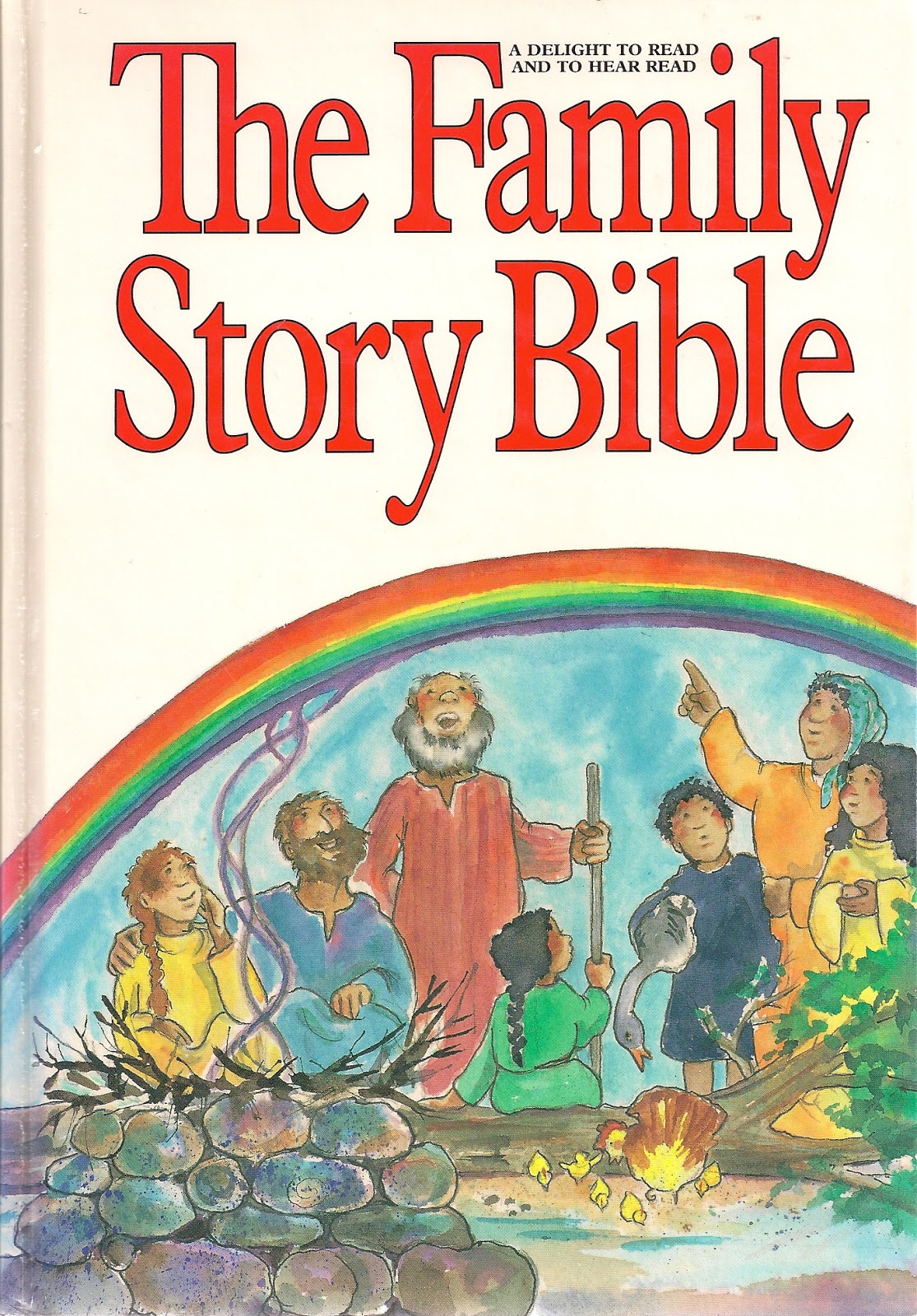
 
F This is the first of two readings about Ruth.  If you use the All Saints readings on November 4, you will be left to tell the whole story of Ruth on one Sunday.  For a concise telling of the story try ”Two Brave Women” in The Family Story Bible, by Ralph Milton.  It can be read aloud in 5 minutes.  I mention it here should you be telling the entire story of Ruth this week.


Psalm 146

F On the Sunday before the oh so hotly contested election in the US, highlight verses 3-4 before reading the whole psalm.  For the children add presidents, vice-presidents, senators, etc. to “the princes.”  Note that whoever wins or loses the election on Tuesday, we still depend most on God’s power and love.  The congregation could read the entire psalm together or using the script below.

F Verses 5-10 list what God does with emphasis on the care of those like Ruth and Naomi who marginalized.  To make the list even clearer, replace all the he’s with “The Lord” or “God.”  Include the congregation in reading the psalm by either having different halves of the congregation read alternating statements saying “the Lord” with great emphasis or having the congregation say “The Lord” with a leader completing each phrase.

d d d d d d d d d d d d d d d

Psalm 146

LEADER:    Praise the Lord!
                       Praise the Lord, my soul!

ALL:           I will praise him as long as I live;
                          I will sing to my God all my life.

LEADER:     Don’t put your trust in human leaders;
                         no human being can save you.
                         When they die, they return to the dust;
                          on that day all their plans come to an end.

ALL or ALTERNATING GROUPS or
ALL READ “THE LORD” WITH LEADER COMPLETING THE SENTENCE

The Lord created heaven, earth, and sea, and all that is in them.

The Lord keeps every promise;

The Lord judges in favor of the oppressed

The Lord gives food to the hungry.

The Lord sets prisoners free

The Lord gives sight to the blind.

The Lord lifts those who have fallen;

The Lord loves righteous people.

The Lord protects the strangers who live in our land;

The Lord helps widows and orphans, but takes the wicked to their ruin.

LEADER: The Lord is king forever.  Your God, O Zion, will reign for all time.

ALL:     Praise the Lord!

                                                   Based on TEV

d d d d d d d d d d d d d d d
 

Deuteronomy 6:1-9
 
 
See the mezuzah in the door frame?
F Introduce this reading by showing a mezuzah, explaining its use, and pulling the scripture parchment out of it.  Enjoy the Hebrew lettering, then read the verses from an English Bible.  Note that just as Jewish families touch the mezuzah each time the enter or leave their home, Jesus did the same in his home.  Suggest that worshipers remember this as they listen to the gospel reading.  (This could be a children’s time or you could make it the Old Testament reading for the day.)
 

Psalm 119:1-8

F Often the psalm or a part of it is read as a prayer or call to worship without much comment.  Today take time introducing Psalm 119.  It is the longest psalm and the longest chapter in the Bible.  It has 176 verses divided into sets of 8 verses.  Every line in each set begins with the same letter of the Hebrew alphabet.  The verses we read today begin with the first letter – aleph.  Prove this showing the psalm in a Hebrew Bible with the matching letter at the far right of the line.  (That requires marveling at the fact that Hebrew reads right to left!)  Note that every single line is a line praising God’s Law.  That is how much the psalmist thought about God’s Law!  Then read it together.  (Have worshipers find the psalm in their Bibles and read from it.)

F The psalm uses 6 synonyms for Law that appear in these verses.  If you haven’t recently done so, display each one on a separate small poster.  Give them to 6 different worshipers to hold in the front as you read instructing each one to raise his or her poster every time the word is used.  The words used in the NRSV are

Precepts
Law
Statutes
Ordinances
Decrees
Commandments


Hebrews 9:11-14

F It is hard to read this passage without getting tripped up in the details of blood sacrifices and the one-up-manship that is employed against the Temple worship and Judaism in general.  Children are offended by the animal sacrifices and can hear that Christians are better than Jews.  So, I’d downplay this or skip it entirely.  But, if you do read it….

ONCE AND FOR ALL
F The main word is that Jesus died ONCE FOR ALL, i.e. he died on Good Friday for all the people of the world then and now.  God loves us every day, but on Good Friday God in human skin forgave us when we nailed God/Jesus with all that love to a cross.  That is what makes Good Friday and Easter so special.  Because God forgave the people who killed Jesus on that day and because Jesus did not stay dead but was alive again on Easter we know that today and every day God loves and forgives us.

One could embellish ONCE FOR ALL saying once for all people, once for people of all times, once for people of all places, once for people of all races, etc.  Enjoy all the people who are included in the FOR ALL.
 
F If you are celebrating Communion today, talk with the children about the bread and the cup.  Speak about them as symbols that remind us about what happened on Good Friday.  The bread reminds us that people whipped Jesus’ body and nailed it to the cross.  They broke his body.  The purple wine/grape juice reminds us that on Good Friday Jesus bled.  He bled when he was whipped and he bled from the nails on the cross.  When each of us eats and drinks here we are saying that we are among the people Jesus was broken for and bled for. 

Depending on your denomination’s theology, you may want to explore the fact that though we say “this is Christ’s body broken for you” and “this is Christ’s blood shed for you,” the bread is just bread and the cup contains plain old wine or grape juice.  We eat and drink them together to remember that Jesus’ very real body was broken and blood was shed.

This may be stretching it, but if your worship is focused on the 2 great commandments, it would be possible to use a heart shaped loaf of bread as the loaf that is picked up and broken before serving.  The point is that Jesus/God loved us so much that Jesus/God forgave us even when we broke Jesus body and make him bleed on the cross.  Before serving the sacrament with this loaf, show it to the children and all worshipers and ponder its significance.
 

Mark 12:28-34

Children who attend church school most likely know the two great commandments.  When they hear them in the sanctuary today, they realize that these are indeed important rules and not just for children but for all people. 

F Identify specific ways one can love God with soul, mind and strength.  We love God with our souls when we sing songs for God in the sanctuary and when we thank God for all our blessings every day.  We love God with our minds when we both study the world God created and work on taking good care of it and when we study the Bible to learn how God wants us to live with each other.  We love God with our strength when we build Habitat houses or give a lonely person a hug.


F After talking about the 2 great commands, offer each family a red posterboard heart strung on a piece of yarn or string and printed with “Love God” on one side and “Love people” on the other side.  Instruct them to hang this heart in a frequently used door in their home to remind them of God’s rules.  These hearts could be produced by an older children’s church school class as a gift to the congregation.

To further emphasize this heart, hang a large heart mobile printed with the commands at the front of the sanctuary or in each door to the sanctuary for the entire service.

And yes, this heart is rather like the Jewish mezuzah.

F Sing one song with which to love God and one about loving each other.  Introduce each identifying its purpose.  Two possibilities:

“For the Beauty of the Earth” for loving God
“Lord Help Us Accept Each Other” for loving each other

F If you are reading Ruth’s story today, reread the paragraph in the Ruth section above using Ruth as an example of the nitty-gritty work that love takes and the suggestion about illustrated prayers for your family members.

Thursday, August 23, 2012

Year B - Proper 19, 24th Sunday in Ordinary Time, 16th Sunday after Pentecost (September 16, 2012)


Proverbs 1:20-33

F This is not the best reading about Wisdom for children.  She sounds like a peevish teacher reaming out the class about not paying attention and promising dire consequences.  If you do read it, the TEV with its “fools” is better than translations which speak of “simple ones” or “mockers.”

F Thinking about Wisdom led me to search for wise people in children’s literature.  There is Jiminy Cricket to whom the puppet Pinocchio learns to listen.  And there are the sages of fantasy literature – Dumbledore, Gandalf, Yoda, Merlin, Obi-Wan Kenobi….  all wise men guiding young heroes.  Since they are all male, I am on a search for female sages in children’s stories.  If you know of any, share them in the comments. 


F The Greatest Power, by Demi, tells of a Chinese emperor who needs a wise prime minister and to find this person invites the children of the kingdom to think for a year about what is “the greatest power.”  Children come in with examples from Chinese inventions, money, beauty, etc.  Sing brings a single lotus seed because the seed has the power to recreate life every year.

LAW  DECREES  PRECEPTS  COMMANDMENT  
FEAR  ORDINANCES

Psalm 19

F The RCL suggests reading the entire psalm today.  With children I would start reading with verse 7 to focus on the Law and would use NRSV which maintains the six different terms for Law.  Print each of these terms on a separate piece of poster paper.  Read each one and pass it to a worshiper who is invited to stand at the front.  Give the more complicated words to older worshipers – maybe “ordinance” to a lawyer – and simpler words to younger worshipers.  Point out that they are synonyms, they are different words for the same thing.  Instruct poster bearers to raise their poster as they hear their word in the psalm.  As you read the verses, pause when you come to each poster word. 

F If you regularly use the prayer in verse 14 in your worship, point it out today and explain why it us used in that place and what it means to pray it then.  Then pray it together.

Let the words of my mouth and the meditation of my heart
          be acceptable to you,
O Lord, my rock and my redeemer.

F In honor of verse 10’s claim that the Law is sweeter than honey, give all worshipers a hard candy (perhaps honey flavored) to savor as they listen to a sermon about wisdom and the Law.


Wisdom of Solomon 7:26 – 8:1

Most denominational lectionaries opt for the psalm reading here for good reason.  This description of Wisdom is filled with poetic images.  Each image needs to be explained to the children.  In the end the message is not worth all the effort for children. 


Isaiah 50:4-9a

“I can take it because God is with me” is the simplest summary of these verses.  Children quickly identify what Isaiah is facing (people were beating him, pulling the hair in his beard, spitting in his face).  Because this text also appears on Palm Passion Sunday, Isaiah’s woes can be compared to Jesus’ woes on Good Friday.  Both of these then lead to identifying woes children can face today with God’s help.  If you go this way, be careful not to suggest that children should simply endure all abuse that comes their way.  Bullying and most of the abuse children face needs to be confronted with God's strength rather than endured with God's strength. 


Psalm 116:1-9

This is another psalm I’d skip with the children today.  There is just too much else in the other texts and too many complications in this psalm.


James 3:1-12

Haring, Keith, 1958-1990.
Ten Commandments, unnumbered,
from Art in the Christian Tradition,
a project of the Vanderbilt Divinity Library, Nashville, TN.
http://diglib.library.vanderbilt.edu/act-imagelink.pl?RC=55144
[retrieved August 23, 2012].
F Display this art depicting our dangerous tongues.  Name each of the snakey tongues with ways we use our tongues to do harm – name caller, angry mean yeller, teller of lies about me (to make me look good), teller lies about others (to make them look bad), teller of secrets I promised to keep, stick out (no words just stick out the tongue), explainer trying to prove I’m really OK when I really am not.  In an informal setting children can help you name the tongues and maybe come up with some others. 

F Use these tongues to create a responsive prayer of confession.  The prayer below could be printed for all to read.  Or, the congregational response could be printed and the congregation instructed to respond when the leader pauses.

L L L L L L L L L L L L L L L

A Confession About Using Our Tongues

Leader: God, angry words explode out of us.  We do not think about what we say or how it will hurt people.  We only think of our own anger and putting it all into words so everyone will know how angry and hurt we feel.

People: Forgive us for the way we hurt others with our tongues.

Leader:  We say things that are not quite true to make ourselves look good to others.  We add to the truth, change the story just a little bit, even lie for our own good.

People: Forgive us for the way we hurt others with our tongues.

Leader:  We also say things that are not quite true about others to make them look bad.  We change the story just a little bit and even lie so we look better and they look worse.

People: Forgive us for the way we hurt others with our tongues.

Leader:  We know lots of names that are meant to hurt and should never be said.  We don’t really intend to say them, but we do.  We spit them out hoping they will embarrass and humiliate. 

People: Forgive us for the way we hurt others with our tongues.

Leader:  We promise we will never tell a secret.  Then we do.  It is just too good to keep to ourselves, so we break our promise and we tell.

People: Forgive us for the way we hurt others with our tongues.

Leader: We use our tongues to convince ourselves that all the wrong we have done and all the hurt we have caused are not really so bad.  But we know in our hearts that they are.  We have broken your Law.  We have not loved you or others with our tongues or our lives.

People: Forgive us for the way we hurt others with our tongues.

Leader: Lord hear our prayers.  Forgive us and guide us.  May the words of our mouths then be acceptable in your sight.  Amen.

L L L L L L L L L L L L L L L

F Children can understand that the biggest problem with our tongues is that we can’t unsay anything.  Once we say it, it is out there.  Apologies help, but the hurt is still there.

F This is also a chance to explore the old adage “Sticks and stones may break my bones, but names can never hurt me.”  The fact is that names DO hurt.  When people are called nasty, dirty names they know what the name caller thinks of them – and that hurts.  Those people can be strong, not believe the name caller, and work to prove they are better than the name caller claims.  But, it still hurts. 

There is actually a No Name Calling Week in many schools in January.  Go to No Name Calling Week to learn more about it and download some great resources.  There would still be time to sponsor one in your community this January.

F I’d go straight to the misuse of the tongue by-passing the references to bits in horses mouths and rudders on ships.  Before they understand either of these metaphors children need to learn about the horse’s bit or the ship’s rudder.  Then those need to be connected to tongues.  Neither adds much to what they get from James' direct message.

F In our day of electronic communication James’ message about tongues applies to texts, tweets, twitters, etc. as well as oral communication.  It is really the words that come off our tongues or through our fingers that are the problem.  Once those words are out there, they and the pain they cause can’t be called back.  For some reason many older children with their first devices seem willing to say things on line that they would never say with their tongues.  They needed repeated challenges from a variety of sources to save them from “learning the hard way” how much damage can be done on-line.


Mark 8:27-38

F Most children think Christ is Jesus’ last name.  This is an opportunity to reintroduce Jesus’ name as “Jesus, the Christ” and to explore what the title Christ means.  In simplest terms, Christ is God’s special leader.  When Peter said “You are the Christ” he was saying you are the special leader from God for whom we have been waiting for centuries. 

F Create a litany in which the leader tells events in Jesus’ life ending with a statement about what people said about him to which the congregation responds with “We say, you are the Christ.”  For those of you who have copies of the Forbid Them Not series, go to Year B, page 151 to find a complete script.  Others can create their own version of this.

F Children hear calls to “take up your cross” literally.  They need to be told that Jesus is not calling us to pick up a wooden cross.  He is not even calling us to wear cross jewelry or tattoos.  He is calling us to do hard things to love God and other people – even when they hurt us.  Similarly, “deny yourself” needs to be translated to mean think about others first.  Do not think about what I want, but what they need.  This starts with everyday events like putting down your video game to play with your younger brother so a parent can get some work done. 

F Because children do not use the word cross metaphorically, avoid hymns that do, e.g.”Beneath the Cross of Jesus”.  Instead choose discipleship hymns such as “Take My Life and Let it Be Consecrated.”

Wednesday, February 22, 2012

Year B - The Third Sunday in Lent (March 11, 2012)


Remember today is Time Change Sunday in the USA.  Prepare to lose an hour’s sleep and get to the church on time!

Zurbarán, Francisco, 1598-1664.
Crucifixion, from 
Art in the Christian Tradition,
project of the Vanderbilt Divinity Library, Nashville, TN. 
http://diglib.library.vanderbilt.edu/act-imagelink.pl?RC=47447
[retrieved February 22, 2012].

Today’s cross is a plain wood, nail cross (if you will not feature it on Good Friday) or a picture of the crucifixion.  (The one here comes from the Vanderbilt Divinity School library with permission to use non-commercially.  You may have other images hung on the wall in the church or in great art books.)  Display the cross in order to talk about the facts of crucifixion and to highlight Jesus’ courage in facing crucifixion.  Facts need not be as gory as Mel Gibson’s film, but do need to insist that this was a very painful way to be killed and was meant to make fun of the person being killed.  If you are using a wooden or nail cross, pass it among worshipers to handle as you talk about crucifixion.  If you use a picture, point to details in it, describe what they meant and how they felt to the one being crucified.  (In the posted piece I’d point to the nails in the hands and feet, the fact that most of the crucified one’s clothes have been removed, and the sign over Jesus head.)  All this information helps children understand crucifixion in general and today impresses them with Jesus’ standing up to people (the Temple authorities) who could do that to him.  One preacher said to children, “Jesus loved you so much that he would die rather than stop loving you.”  That is love and courage children can respect.


Both the Ten Commandments and Psalm 19 appear on World Communion Sunday in the lectionary.  Go to Year A World Communion Sunday for a children’s version of the commandments, suggestions for children reading both in worship, directions for making a set of tables to display in worship, an idea using honey flavored hard candies, and notes about how children understand rules.


Exodus 20:1-17

U  Go to the World Communion Sunday helps at the link just above.

U  Turn the Ten Commandments and 1 Corinthians 1:25 into a responsive reading with leader reading each commandment individually and the congregation responding to each one with the Corinthians verse (For God’s foolishness is wiser than human wisdom, and God’s weakness is stronger than human strength.)  Practice the verse with the congregation before the reading.  Briefly explore how wise or foolish it is to keep one of the rules (maybe one about telling lies).  Then challenge worshipers to listen for how wise or foolish each of the other rules are.

This could be the Old Testament reading for the day or could be done at the beginning of the sermon as an interactive part of the sermon.

U  Create opposites for the Ten Commandments and imagine a world lived by those rules.  This connects to the Epistle question about what is really wise and foolish.  The list below is a starter, suggest others in comments.

X  X  X  X  X  X  X  X  X  X  X  X  X  X  X  X  X  X  X  X  X  X  X  X  X  X

1.      You are your own boss.  Do whatever you want to do whenever you feel like it. 
2.      Decide who and what is important to you.  Pay attention only to those people and things.
3.      It does not matter when or how you say God’s name.  You can use it to swear or cuss or to get what you want (as in “God is on my side” statements).
4.      It doesn’t matter if you worship with God’s people on Sunday/regularly.  If there are other things you’d rather do, go do them.
5.      Parents don’t get it.  Ignore them whenever you can.
6.      Kill whatever or whoever gets in your way.  The strongest live longest.
7.      Don’t worry about your family.  Think only about yourself and what you want.
8.      Finders keepers! 
Toddler’s Rule of possession:  I see it, I want it, it’s mine! 
If you want it, figure out how to get it.
9.      Lie if you have to get out of trouble.
Lie to get what you want.
Lie to make yourself look good – even if it makes someone else look bad.
10.  The one who dies with most toys wins. 
The world is full of wonderful things.  Get your share.

X  X  X  X  X  X  X  X  X  X  X  X  X  X  X  X  X  X  X  X  X  X  X  X  X  X


U  If you are recognizing Scout Sunday, talk about the importance of the scout laws to scouts.  Living by rules or laws helps us know who we are and how we want to live. 

To take it to another level that will be a stretch for younger children:  Just as scouts do not have to earn the right to become a scout by proving they can live by the scout laws but work at living by the laws because they are a scout and want to be a good scout.  So, God’s people don’t live by the 10 Commandments to earn God’s love, but live by them because they show them how to be God’s happy, loving people.


Psalm 19

See the note and link at the top of this post for ideas about using the psalm linked with the Ten Commandments.


1 Corinthians 1:18-25

U  See the cross suggestions at the top of the page and the suggestion for a responsive reading intermingling the Ten Commandments with verse 25.

U  Children are intrigued by Paul’s discussion about what is wise and what is foolish.  Is it wise to share the fries or to keep them all for yourself?  Is it foolish to risk being laughed at by the popular kids if you sit with an outcast?  Linking this text with the Ten Commandments to explore the wisdom and foolishness of individual commands draws children’s attention.

U  Go back to the featured cross of the week to ask whether allowing Jesus to be crucified was a wise or foolish move on God’s/Jesus’ part.  After looking at the details of crucifixion, ask “What was God thinking?  Was God nuts? People wanted a leader, someone who can get through any situation and get us through any situation, not someone who gets killed!  On a cross!” 


John 2:13-22

John is always working on several levels of meaning.  In this scene one level is about the moneychangers.  Another is about Jesus replacing the sacrificial system of the Temple, and even the Temple, entirely.  The first makes more immediate sense to children.  The second requires some care.

U  To unpack what was going on with the moneychangers at the very beginning of John’s gospel.

Two specific things about the Temple scene made Jesus so angry that he went into action.  The first was that the Temple had been divided into sections for different types of worshippers.  The Jews got the best section.  The foreigners got the section furthest from the altar.  Imagine with worshipers different parts of your sanctuary set aside for different kinds of worshipers.  If you are an old Southern US church, this is a good opportunity to point out the history of a slave balcony and slave doors.  To make matters worse, Temple leaders had allowed business people to set up booths in the foreigners section – really disrupting their ability to pray in peace!

Use some play money or foreign coins and some daily coins to demonstrate what the moneychangers did.  Show the “different” coin and explain that the Temple leaders had decided that only this money could be put in the offering boxes at the Temple.  Act out the purchase of these special coins from money changers who charged “a small fee” for each coin. 

After setting this scene in Temple take time to identify what about it made Jesus so angry.  (Don’t count on the children getting it on their own.)  Point out that Jesus did not just “lose it” and act out in way he would later regret.  He knew exactly what he was doing and he knew that it would make powerful people very, very angry with him.  But, he still did it.  Describe Jesus’ actions not so much as wildly angry, but brave and courageous.

Before singing “God of Grace and God of Glory” point to the “Grant us wisdom, Grant us courage” chorus noting both the repeated words and the words that are different in each verse.  Practice singing it together.  Then invite worshipers to sing it.  The vocabulary of the verses is difficult for children to follow, but even the youngest can sing the repeated “grant us wisdom, grant us courage.”

U  If you want to explore John’s insistence that Jesus is turning over the whole Temple sacrifice system, talk about the sellers of animals rather than the money changers.  Name some of the animals sacrificed and very briefly describe the altar ritual in which they were killed as an offering to God.  Most children are deeply offended by the idea of killing an animal to show that you love God or to ask God to forgive you for the bad things you do.  They are happy to hear Jesus insist that the whole idea was wrong.  All we need to do is praise God with words and songs and the way we live every day.  When we mess up, God will forgive us when we say you are sorry. 

WARNING:  John sets up Jesus as the new sacrificial lamb for all times.  This made sense in John’s world.  In today’s world, especially among today’s children, it makes God look highly suspect.  If God needs some animal or Jesus to die a painful death in order to forgive us, God looks a little weird and rather mean.  I know it is the base of classical atonement theology, but I’d stay away from it.  It makes more sense to simply say Jesus said killing animals to communicate with God was nuts.

Friday, September 23, 2011

Year A - Proper 25, 30th Sunday in Ordinary Time (October 23, 2011)

Deuteronomy 34:1-12

X If you have been using the Moses Display (click on Moses Display), before reading this text place a fist size rock on the lectern.  Then read the text.  Finally, place the rock on the edge of the display to recall Moses’ burial in an unmarked grave at the edge of the wilderness.

X Pray for all kinds of leaders, remembering to include leaders in children’s groups – elected government officials, lay and ordained church leaders, class officers, team captains, patrol leaders, etc.

X Jump to 1Thesslonians below for a suggestion for connecting Moses, Paul, pastors of your church and the children.


Psalm 90:1-6,13-17

There are several ways to read this psalm that will draw the attention of the children.

1.      Note that this psalm is credited to Moses and invite worshipers to imagine Moses praying it as he looks out over the Promised Land before he dies.  Then invite an elderly man forward to read the psalm.

2.      Since this a psalm that speaks to God who is Lord of all generations, have it read by readers of at least two generations.  A white haired reader could be paired with an older elementary school reader with each reading alternate verses.  The older reader goes first and reads verses 5 and 6 as one reading.

3.      Or, to involve more readers of a variety of ages and sexes, use the five reader script below.  Include an older child, a teenager, a young adult, a middle aged adult, and an older adult.  It doesn’t matter in what order they stand and read, but I would mix them up rather than go youngest to oldest or the reverse.  They could stand around a central microphone each stepping to the mike to read from a script they hold or each could wear a lapel mike.  A rehearsal before the service is essential for all to feel comfortable and thus project the faith of all generations that underlies the psalm.


XXXXXXXXXXXXXXXXXXXXXXXXXXXXXXXXXXXXX

Psalm 90:1-6, 13-17

Reader 1:      Lord, you have been our dwelling place
in all generations.

Reader 2:      Before the mountains were brought forth,
or ever you had formed the earth and the world,
from everlasting to everlasting you are God.

Reader 3:      You turn us back to dust,
and say, “Turn back, you mortals.”

Reader 4:      For a thousand years in your sight
are like yesterday when it is past,
or like a watch in the night.

Reader 5:      You sweep them away; they are like a dream,
like grass that is renewed in the morning;
in the morning it flourishes and is renewed;
in the evening it fades and withers.

Reader 1:      Turn, O Lord! How long?
Have compassion on your servants!

Reader 2:      Satisfy us in the morning with your steadfast love,
so that we may rejoice and be glad all our days.

Reader 3:      Make us glad as many days as you have afflicted us,
and as many years as we have seen evil.

Reader 4:      Let your work be manifest to your servants,
and your glorious power to their children.

Reader 5:      Let the favor of the Lord our God be upon us,
and prosper for us the work of our hands—
O prosper the work of our hands!

                                                                                                NRSV

XXXXXXXXXXXXXXXXXXXXXXXXXXXXXXXXXXXXX


X If you have been working with the Moses display, sing “Our God Our Help in Ages Past” (based on Psalm 90:1-5) as the closing hymn.  As it is sung have each item on the display carried out down the central aisle. Follow the order in which the items appeared in the story.  In rehearsal assign who carries what and seat them in the correct order.  Instruct them to pick up their item and to walk slowly out holding it with great dignity in both hands at shoulder level.  The burning bush candle carrier, picks up the candle and steps to the side as the others leave.  When all are gone, that candle is placed alone in the center of the display again.  The benediction then refers to God’s presence with Moses through all the years in the wilderness and God’s continued presence with each of us during the coming week.  (The recessional of the items is one way an older children’s class can become worship leaders together.)


Leviticus 19:1-2, 15-18

Point out places where the word HOLY appears in your sanctuary– in paraments, carved into the Table or other wooden furniture in the front, HOLY Bible, etc.  Explain that HOLY is here to point first to the fact that God is holy.  We meet the Holy God at the Table and in the Bible.  But the HOLY is also for us.  We are meant to be holy, to be like God.  Read Lev. 19:1-2.  Then jump to 18b.  Note that this is the Golden Rule.  (Enjoy the fact that you all now know exactly where it came from.)  Then summarize, “how can we be holy, like God?  We can follow the Golden Rule.”


Psalm 1

Psalm 1 is an almost over-simplistic comparison of “the good” and “the wicked.”  To make the comparison visual, have it read by two readers (perhaps both wearing dark shirts and pants or skirts).  One reads the verses about the good.  The other reads the verses about the wicked.  They begin standing back to back in the center of the sanctuary.  Each one turns to recite their verses facing the congregation then returns to the starting position.  This is most effective if the readers actually recite their verses from memory. 

XXXXXXXXXXXXXXXXXXXXXXXXXXXXXXXXXXXXX

Psalm 1

Reader 1:      Happy are those
who do not follow the advice of the wicked,
or take the path that sinners tread,
or sit in the seat of scoffers;
but their delight is in the law of the Lord,
and on his law they meditate day and night.
They are like trees planted by streams of water,
which yield their fruit in its season,
and their leaves do not wither.
In all that they do, they prosper.

Reader 2:      The wicked are not so,
but are like chaff that the wind drives away.
Therefore the wicked will not stand in the judgment,
nor sinners in the congregation of the righteous;

Reader 1:      for the Lord watches over the way of the righteous,

Reader 2:      but the way of the wicked will perish.

                                                                                             NRSV

XXXXXXXXXXXXXXXXXXXXXXXXXXXXXXXXXXXXX

NOTE: I used the NRSV in the script because this psalm is well known in this version.  For a translation with an easier vocabulary for children look at Today’s English Version.


1 Thessalonians 2:1-8

X I doubt that it was intentional, but I think there is a connection between this reading and the story from Deuteronomy.  In Deuteronomy leadership was passing from Moses to Joshua.  In his letter to the folks at Thessalonica, Paul is recalling his ministry with them.  It would be possible to add to the mix stories of previous pastors in your congregation to explore the relationships between people and their leaders.  If you have photographs or paintings of past pastors that are usually hung in public spots, bring them to the sanctuary.  Tell stories.  Ask who knew, was baptized by or married by … the more recent ones.  Then move on to your points about pastoral relationships.  Children may miss some of your later points, but they will be more connected to pictures they hardly noticed before – and those pictures will connect them more fully to the church.

X The Stewardship Connection here is the way leaders use their talents and time to help the whole community.  Deuteronomy reminds us that it is not about Moses, fine as he was.  It is about God and God’s people in all times and places.  Similarly, it was not about Paul nor about any past pastors nor is it about us.  We are called to live for God where we are.   That is all.  This is a different invitation to leadership than is often offered to children.  Children are encouraged to become leaders because leaders are respected, well paid, etc.  Today’s texts insist that leaders are simply people during their part just as Moses, Paul, and past pastors did their parts. 


Matthew 22:34-46

X If you did not do it several weeks ago when the 10 commandments appeared in the Wilderness saga, prove to the children (and all worshipers) that Jesus’ 2 great commandments really do encompass the Ten Commandments.  Print each of 10 in large letters on separate pieces of paper.  Then sort them with help from the congregation into to two piles, one for “love God” and the other for “love neighbors.“  If the children are up front with you, you can do this on the floor.  Do it with the whole congregation using a tackboard or metallic white board or a flannel board.

To take it another step, turn the sets of rules into a congregational litany with one side of the room reading the Ten Commandments and the other responding with the correct one of Jesus’ Two Commandments.

X To explore the trap the authorities were setting for Jesus, identify some of the people who would have favorites among the ten commandments and would be upset if Jesus did not choose “their law” as most important.  For example, store owners might want to be sure “Do not steal” was most important.  Parents would definitely want “Honor your father and mother” near the top of the list.  And so on.

X Go to The Greatest Commandment Children's Sermon for a ready-made children’s sermon or interesting way to open the “real” sermon.  It addresses the difference in remembering 613 rules or 10 rules or 2 rules.

X Another Stewardship Connection:  Connect the two great commandments to specific items in the church’s budget.  If you sorted cards of the 10 Commandments into two stacks, return with cards bearing one budget item each and add them to the two piles.  The point with the children (and the reminder to the adults, maybe especially the budget committee) is that we use the church’s money to follow the 2 great commands.