Showing posts with label Thanksgiving. Show all posts

Monday, September 16, 2013

Year C - Thanksgiving Day (October 14, 2013 in Canada and November 28, 2013 in the USA)


General Thanksgiving Ideas 
 
R Involving children in community services is a good way to draw a crowd and to introduce children to their community’s religious base.  Anything that works on Sunday morning will work at a community service.  Particularly good ideas include:
  • In advance get children (maybe in their classes) to draw illustrations of the verses or even phrases of one or more of the songs you will sing.  Scan them and project them while the song is being sung.  Probably the best songs to illustrate are
                           For the Beauty of the Earth
                           All Things Bright and Beautiful

  • Include children’s choirs in the singing.  Either gather children in all the churches into one choir or invite several children’s choirs to sing at different points in the service.  The former requires at least one rehearsal which can be both a minus (another meeting) and a plus (chance for children to sing with friends in other congregations and to be in at least one of their buildings).  The latter requires no extra gatherings, but can turn into a choir competition – not terribly conducive to giving thanks.
  • What have you seen well done?
 
R Thanksgiving music for children

  • Before singing the Doxology, invite all the children to meet you at the front.  Note that you are about to sing a song that begins, “Praise God from whom all blessings flow.”  Define “blessings” as those things that are so good they make us happy to be alive.  Name one or two of your blessings, then ask the children to name a few of theirs.  (And, yes video games are blessings to certain people.  So, don’t let the congregation laugh at them!)  Then send the children back to their seats to join the congregation in singing the song praising God for all their blessings.
  • The old standard Thanksgiving hymns “Come, Ye Thankful People Come” and “We Gather Together to Ask the Lord’s Blessing” are not easy for children.  They are filled with unfamiliar vocabulary and metaphorical harvest images.  Older adults learned them at school when they were growing up.  Children today do not.  So, either devote some time in worship to learning them or select other praise and thanks hymns.
  • “We Plow the Seeds and Scatter” is a better harvest hymn.  It sets concrete harvest images to a simple tune.
  • “Now Thank We All Our God” is a more general thanksgiving hymn children can sing at least parts of.
  • “Grateful,” a song by John Bucchino, is illustrated in a book of the same name that comes with a CD of Art Garfunkel singing the song.  One way to use it in worship is to scan and project the pages, teach the congregation the chorus, then listen to Garfunkel sing joining him on the chorus as the book is projected.  (The seminary professor I saw do this, said she felt she was OK on copyright grounds since she bought the book and absolutely refused to lend her power point of it – “even to my very best friend on a desperate night.”)  The third verse is the most child accessible.  I would start there to introduce the song and define “grateful.”  Many of the ideas in the other verses are beyond the experience of children.
  • What songs would you add?
 
R Thanksgiving begins with noticing what is all around you.  It is easy to overlook our blessings.  Remind worshipers of Moses noticing the burning bush, stopping to look at it, and meeting God there.  Then read and discuss Elizabeth Barrett Browning famous poem.

“Earth's crammed with heaven,
And every common bush afire with God,
But only he who sees takes off his shoes;
The rest sit round and pluck blackberries.”
                  Elizabeth Barrett Browning

Finally, provide paper and crayons or markers for children (and older worshipers) to write poems or draw pictures of where they see God all around them.

R In the congregation’s prayers include prayers for the long holiday weekend.  Some children are looking forward to seeing extended family members. Others are dreading a boring, nothing special holiday.  Those excited about family gatherings often face undesired seating assignments at “the feast,” uncomfortable sleeping arrangements, and long trips in cramped cars.  All are worthy of prayer.

R Especially if it is the beginning of Thanksgiving week, assign homework.  Encourage households or individuals living alone to take time once each day this week to list things for which they are thankful.  Suggest that they do it at the same time each day – before or after a meal, at bedtime, whenever works.  Households turn it into a prayer by saying together “we thank you, God” after each thing is named by each person.  Individuals can add the phrase as they identify their blessings.  (If you want, admit that you hope that by doing this every day for a week, people will decide to keep doing it.  You are encouraging a simple daily prayer practice.)


This Year’s Texts

R There are lots of groups in today’s texts.  Children instinctively understand what it means to define yourself by the group to which you belong.  When meeting someone new children start with their name and age but quickly begin naming the groups to which they belong.  The unstated assumption is that if you know which groups I belong to you know who I am.  Usually they name sports teams and activity groups in which they participate.  The trick is to help them look to larger groups of which they are apart – in this case the people of God.  All of today’s texts call us to rejoice and give thanks in the context of groups.  Deuteronomy gives thanks for being among God’s people and sharing their story.  Psalm 100 calls to “all the earth” and insists that we are “sheep of his pasture” (a flock).  Paul calls the Philippian Christians to rejoice because they are a part of church and belong with Christians everywhere.  Alert worshipers to these groups early in worship and challenge them to listen for other groups and to think of groups that make them rejoice.


Deuteronomy 26:1-11

R Act out this scripture as it is read.  Either have children (or all worshipers) come forward placing baskets of fruit and vegetables on the Table or ask a single household to carry in one large basket on the Table or on the floor in front of the Table.  A single family might then turn to read or recite the creedal verses.

Focus on gratitude for food. 

R Arrange a large cornucopia of fresh fruits and vegetables on a table at the front and pile canned goods for the local food bank around the table on the floor.

R Create a responsive prayer about all the phases of food production from growth to farmers to deliverers.  (There is a sample on page 192 or Forbid Them Not, Year C.)  The congregation’s response to each petition is “Give us this day our daily bread.”

R Invite children to come forward to share apple slices.  Before distributing them, with the children identify everyone who was involved in getting this treat to you.  Go all the way back to God who planned for the raw material and the process that produced the apples.  Then enjoy the apples with a prayer of thanks.

R All The Places to Love, by Patricia MacLachlan book, captures the connection to the land that underlies this text.  In it a boy tells about all the places he and members of his family love around their farm.  Read all or parts of it, challenging children and other worshipers to think of the places they love most and where what happens there makes all the difference in the world.  (It can be read aloud in a little over 5 minutes.)


Psalm 100

R Remember that children need to hear that God’s courts and gates are other words for God’s church.

R Turn the psalm into a congregational reading with many short lines that new as well as experienced readers can follow.  (The two groups could be choir and congregation or two halves of the congregation.)

RRRRRRRRRRRRRRRRRRRRRRRRRRRRRRR

Psalm 100

Leader:          Make a joyful noise to the Lord, all the earth.

Group 1:       Worship the Lord with gladness!

Group 2:       Come into God’s presence with singing!

Leader:          Know this!  The Lord is God.

Group 1:       Know this! We belong to the Lord who made us.

Group 2:       Know this! We are God’s people,
                               and the sheep of God’s pasture.

Leader:          So, enter God’s gates with thanksgiving,

Group 1:       Come into the holy courts with praise.

Group 2:       Give thanks to God and bless God’s holy name.

Leader:          For the Lord is good;

Group 1:       God’s steadfast love endures forever,

Group 2:       God’s faithfulness is for all generations.

            Based on NRSV and Presbyterian Book of Common Worship

RRRRRRRRRRRRRRRRRRRRRRRRRRRRRRR

R If you sing “All People That on Earth Do Dwell” in the USA, have a soloist or the choir line it out for the congregation.  That is the way the pilgrims sang it.


Philippians 4:4-9
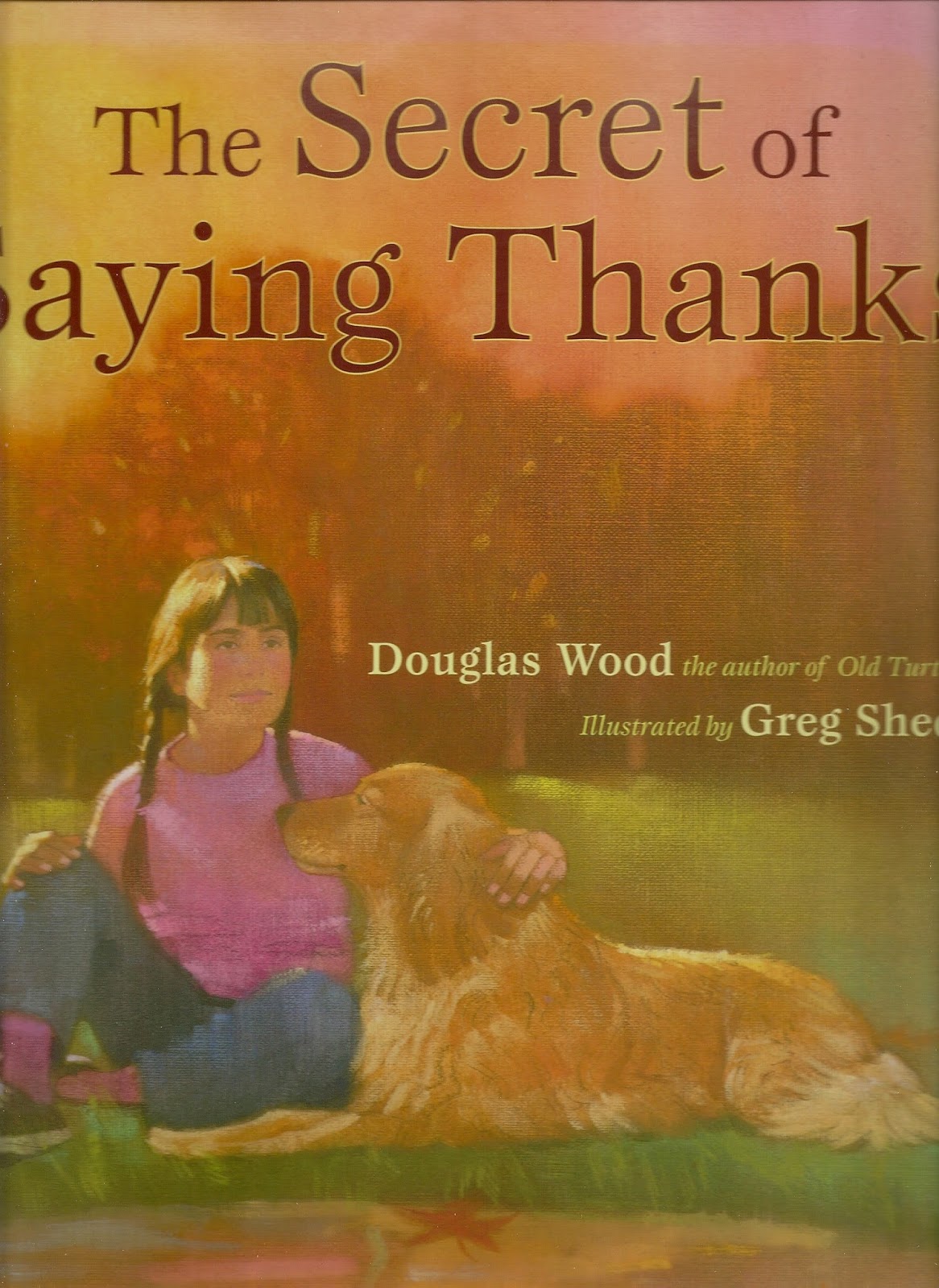
 
R The Secret of Saying Thanks, by Douglas Wood, insists that giving thanks makes us happy.  “We cannot feel thankful and unhappy at the same time.”  “We don’t give thanks because we’re happy.  We are happy because we give thanks.”  The book can be read in about 8 minutes.  With a small group sharing the pictures as you read is the way to go.  With a larger group, bring props (a big yellow paper sun, a flower, a tree leaf, a rock, a stuffed animal - a bird if you can find one, a shiny silver star cutout, a bottle of water, and a big red paper heart) to display or hand to people nearby as you read the pages about the things which lead us to be thankful.

R Jewish midrash includes several stories about how people responded to God’s dividing the sea for the slaves to walk through on dry land and then bringing it back together to drown Pharoah’s army.  It seems when they came out on the other side of the sea some of the newly free slaves complained that walking through the sea was scary and hard.  They could only think about how tired and dirty they were.  But Miriam and others, who were also tired and dirty, danced and sang songs praising God for the incredible miracle they had just experienced and their new freedom.  After describing the situation, ask which group was “right.”  Of course, both were at different levels.  Then ask who they would rather travel into the wilderness with.  Younger children will not be able to follow this.  But older children can be drawn into the possibility of rejoicing being more a matter of one’s attitude toward what happens than what actually happens.  They can be helped by parallel examples - maybe siblings who get similar sweaters from their grandparents.  One child is delighted and the other discards it as dumb.

R “Rejoice, Ye Pure in Heart” really needs a festal banner to be waved and walked through the congregation as the song is sung.  Make a flag banner featuring the word “Rejoice!” or select a praise banner from your collection.  Introduce it as a “festal banner.”  Before singing the hymn, practice the chorus once so even non-readers can sing along.  Also point out that the last verse is the same as the first and summarize the message of the two middle verses with reference to “in gladness and in woe” in verse 2 and the call to rejoice even at death in verse 3.

R Another way to use this hymn is to have the congregation sing just the chorus in response to each verse of Psalm 100.


John 6:25-35

R Maybe especially on Thanksgiving when there are other symbols around, it is hard for literal thinking children to make sense of Jesus’ talk about being the bread of life.  I’d save it for other days when there is time to unpack it in some detail.  For today, the bottom line is that as good as bread/food is, God’s love and forgiveness are better and more important. 

Thursday, September 27, 2012

Year B - Thanksgiving Day, October 8, 2012 in Canada, November 22, 2012 in the United States


RThe RCL offers a different set of readings for Thanksgiving for each year.  They are unique but share common themes.  Go to Thanksgiving Day (Year A) for suggestions about Thanksgiving in general including:
Ø Ways to include children in community Thanksgiving services
Ø Commentary from child’s point of view on the traditional Thanksgiving hymns
Ø One children’s story book about gratitude
Ø A Thanksgiving homework assignment for worshipers
  
R To those I add:

In the congregation’s prayers include prayers for the long holiday weekend.  Some children are looking forward to seeing extended family members. Others are dreading a boring, nothing special holiday.  Those excited about family gatherings often face undesired seating assignments at “the feast,” uncomfortable sleeping arrangements, and long trips in cramped cars.  All are worthy of prayer.

Focus on the word “blessings” in the Doxology.  Define blessings as the good things that make life worth living and that you know are gifts.  Name a few of your own.  Invite worshipers to name some of theirs.  Then sing the song.

This could be done as a children’s time just before the singing of the Doxology or could be done with the whole congregation in their seats.  For fun, let the congregation start to sing the Doxology.  Interrupt after the word “blessings” to have this discussion.  Then, pointing out that now we are now ready to truly praise God for all our blessings, invite the congregation to sing the Doxology.  Obviously you need to let the musicians in on your plan.


This Year’s Texts

Joel 2:21-27


R Often when children list things for which they are thankful they jokingly list lots of seemingly silly things.  Pick up on that with a “thank God for dirt” discussion.  List all sorts of wonderful things about dirt
Ø Mud pies
Ø Good smell of freshly plowed dirt
Ø All the worms, snails, etc that live in dirt and help enrich it
Ø It turns seeds into flowers, trees, and food
Ø Clay that makes jars, mugs, even bricks with which to build houses
Ø Minerals we use for medicines
Then read verse 21.  From there you can jump to Matthew’s flowers of the field.

R Repeat the process with animals and Matthew’s birds of the air.


Psalm 126

R This may be an especially good psalm to read after a less than bountiful harvest.  Verses 1-3 recall how it felt to be thankful in a really good year (after they had returned from Exile).  Verses 4-6 are filled with hope during a bad year that the good years will return.  To emphasize this, have each half of the psalm read by a different half of the congregation.  The reading groups might be the choir and the congregation or two halves of the congregation.

REMEMBER that farm children will be quite aware of the problems with the “bad year.”  Urban children are less likely to even register that it has been a bad year.  It may help the urban children to hear about higher food prices and even foods that are harder to find in the stores after a “bad year” on the farms.

R This psalm plus the Joel text may be an opportunity to identify what makes a “good year” and a “bad year” – both agriculturally and in all of life.  With this as background, you can then explore the differences in saying thanks in good and bad years.


I Timothy 2:1-7


R Paul instructs Timothy to lead his people in praying for community and national leaders.  In the US after an election in which people were anything but respectful of each other ( I am posting this in September), praying for our leaders no matter whether we voted for them or not, is part of much needed healing.  Children miss out on such prayers when they are voiced in broad general terms.  To help them join in…

Ø Together make a big scribble on a poster.  Write the names of a leader or governing body in each section.  Then go through the list identifying prayers for each one.

Ø In an “eyes-open prayer” display pictures of people, locations, even events from the last year.  Offer prayers for each one being specific.  This could be a matter of projecting pictures for all to see as a prayer leader prays about them.  Or, it could be a prayerful discussion with the children or the whole congregation.

Ø     If your ritual includes prayers for leaders on a regular basis, chances are good they are general lists of officers and types of leaders.  Take time today to identify the people who currently serve in those offices and put the prayers for them into your own words.  

R Commentators point out that the leaders Timothy and his friends were to pray for were Romans who were trying to kill as many Christians as possible.  In a polarized nation and world this is a call to pray for people with whom we agree and for people with whom we disagree.  Create a responsive prayer in which the worship leader describes a person or group on one side of an issue and then the leader or group on the other side.  After each petition the congregation adds, “Lord, bless them and keep us living together in peace.”  Pray for countries on different sides of international conflicts, political leaders, and local groups.

R The Christological hymn describing Christ as the mediator is hard for children to understand.  First, they need a definition of mediator.  Then, they need help to get around the idea that God is big and scary and Jesus is the good guy who helps us deal with God.  On Thanksgiving I’d simply read this part without drawing much attention to it.

R This text is also read on Proper 20 in Year C.  Go to Proper 20 (Year C) for ideas about God’s love for all the people of the world that may or may not be applicable on Thanksgiving.


Matthew 6:25-33

R This passage shows up twice in the lectionary - on Thanksgiving Day and on the Eighth Sunday after Epiphany which falls just before Lent.  It reads differently and asks for different consideration at these two moments in the church year.  On Thanksgiving it calls us to look to God with gratitude and trust.  Before Lent it admonishes us not to get all tied up in our clothes and financial worries.

R  Adults worry about aging.  Children worry about growing up.  If they play basketball, they want to be tall enough.  If they are a dancer or gymnast, they want to be small enough.  All want to grow up to be good looking. 

Show pictures of baby animals and adults animals.  Marvel at how they change.  End with pictures of humans at different ages.  Note that God has a different plan for each one – and that God’s plans are good.


Read and enjoy the opening of Peter Spier’s picture book People.  Skip all the information on the opening page.  Start with “We come in all sizes and shapes…” and read through “All of us want to look our best.  Still what is considered beautiful or handsome in one place is considered ugly, and even ridiculous, elsewhere.”  Point to and briefly enjoy all the differences in the pictures.  Do be aware that this book was published in 1980 and so includes some cultural distinctions that are no longer accepted.  So focus on the pictures rather than the verbal country identifications on the page about clothing.  Then reread verse 25 and connect it to all the Spier drawings.  

R Ask children’s classes to prepare banners by pasting birds and/or flowers and/or people all over a large swath of paper or cloth.  There may be one banner with all mixed in together or three topically separate banners.  For a community service children from several churches could gather the pictures and turn them over to children/adults of one of the churches to put together.  Adults could mount the banners on poles for older children to carry in during an opening processional.  Plan for them to be displayed throughout the service.

Monday, August 8, 2011

New Year's Day for Years A, B, and C (January 1, 2012)

New Year’s Day Worship Themes

There are several New Year’s themes that run through all today’s texts: time, God’s powerful presence in the world, the ability to change, and hope.  Children can explore all these themes.

% Time feels different to children who have known so little of it.  For them years last forever.  They are just beginning to sort out the difference between how long a time period feels and the fact that an hour is always 60 minutes long no matter how it feels. 
  

 After exploring the fact that the same amount of time can feel short or long, point to alpha-omega symbols in your sanctuary (paraments, windows, furnishings).  Explain that these are the first and last letters of the Greek alphabet.  Note that saying God is alpha and omega is the same as saying God is A to Z.  Celebrate that God was before time began and will be after time ends and is with us in every bit of our time now.


Before singing “Our God, Our Help in Ages Past” take time to review the words of one or all of the verses.

Start with verse 3 “a thousand ages in thy sight” putting it into your own words.  Point out that when you have lived long enough to celebrate only 6 Christmases, it seems a long time between Christmases.  But, when you have lived long enough to experience 86 Christmases, the time between Christmases seems to fly by.  This is strange (especially if you are 6) but very true.  Then, read the first lines of this verse and ponder the possibility that not a thousand Christmases but a thousand ages (hundreds of thousands of Christmases) are like one evening to God.

Verse 2 says that God (for whom a 1000 ages is an evening) is with us at all times.  You might want to connect to the alpha and omega symbols in paraments, windows, or furnishings in the sanctuary.

Verse 1 is both the introduction and the summary.  I’d start with other verses and  then return to God as our “hope” and “home” in all times. 

I’d focus on the first 3 verses with the children.  The adults will get the last two on their own and the children will grow into them.

% Change is possible.  We can never be totally stuck.  God gives us unlimited fresh starts.  Actually children will quickly point out that there are some things they cannot change, e.g. their size, their athletic or musical ability (or lack of it),the family they live in, whether they have enough money for what they need and want.  Acknowledge this and help identify what we can and cannot change.  Only then, talk about New Year’s Day as a good day to identify one change you can make, want to make, and will work on making.  Warn that change is not easy.  We have to expect to mess up and not quit when it gets hard.  We are not like toy transformers that change in a flick of a few levers.  Change takes time and work.

Invite worshipers of all ages to write one change they would like to make during the new year on a slip of paper (maybe some space left at the bottom of the printed order of worship) and to put it in the offering plate as a gift to God.  In the offertory prayer mention this gifts of commitments to changes.

St. Benedict, who founded the Benedictine order of monks, pointed out that every day (as well as every year) we get a fresh start.  Introduce the discipline of bedtime prayer as a good way to remember this.   Individuals or families think back over their day and identify things they want to tell God about the day.  With children identify the things for which we want to say “thanks” and the things about which we need to say “Help”.  Together tell God about these things in prayers.  (At first parents will have to voice the prayers, but soon older children can take turns voicing the prayers.)  Some parents gather the family for this time.  Others pray with each child individually.  Many parents end this by drawing a cross with their finger on each child’s forehead as they say, “Remember, God loves you and I love ALWAYS. ”  (On the radio this morning I heard an expert on insomnia touting very similar bedtime practices in which adults let go of the day and settle in to sleep.)

% The Epiphany theme “Arise, Shine” resonates with children as they return to school in a new year.  Especially if you need to combine New Year’s and Epiphany themes go to Epiphany Sunday - Year A for ideas.

% The response to all these themes is hope for the new year – and all of the future.  Sing the Argentine “Canto de Esperanza” (Song of Hope) which appears in many recent denominational hymnals.  It is a prayer for the new year that could be sung at the benediction.  If it is new to the congregation, read through the words before singing it.  Because it is short, it can be sung two or three times and guarantee that worshippers will be humming it all day.


Doors Are BIG on New Year’s Day

% Doors are good images for New Years Day.  We have closed the door on the last year and opened the door to a new door.  When you walk through a door things change.  When you go from outside to inside, you use a quieter voice, you wipe off (even take off) your shoes, you expect to do different things.  Walking through doors tells us where we are and who we are.  There are several ways to use doors in worship on New Year’s Day.

Borrow the Chalking the Door ritual which is associated with Epiphany but fits nicely on New Year’s Day too.   It is basically a house blessing.  Using chalk, members of the congregation or household write on the door frame the year’s date and the letters C, B, and M (the initials of the three wise men).  Prayer is then offered asking that the door welcome many visitors during the coming year and that all who come through the doorway be blessed.  Write on the church doors during the worship service with the prayers for all who will come through the doors this year (worshipers, brides and grooms, parents bringing babies to be baptized, families and friends coming to bury their dead, members of community groups which will use the facilities,….).  Then encourage households to repeat it in their own homes.  Print a simple blessing for use at both church and home in the order of worship and give out small pieces of white chalk for home use.  Below is a sample blessing.

God of doors and homes, bless this home this year and every year.
Bless all who come and go through this door, both those who live here and those who visit.
May all who enter through this door come in peace and bring joy.
May all who come to this door find welcome and love.
May the love and joy in this home overflow and spread into the community and the world.


If your congregation decorates the doors with blue streamers on baptismal days, hang those streamers today.  Point out that every time we walk through those streamers we not only celebrate the baptism of that day, but recall our own baptism and the fact that God loves us and forgives.  God gives us a endless new starts, a new start every day, and a new year today.  If you do not plan to do it on The Baptism of the Lord Sunday, do a remembering of our baptisms service today. 


Check out the Judgment Doors in the section on the gospel text for the day.


The New Year’s Day Texts

Ecclesiastes 3:1-13

% To children Ecclesiastes says that life is full of all sorts of things and that all of them are good (in the sense of blessed).  Help the children catch the significance of the 14 rather general pairs of opposites by exploring several for them. 

Vs 2        We all are born and we all die.  Birth and death are simply part of God’s plan for our lives.

Vs. 2b    There are seasons.  We can’t plant seeds during the winter or harvest them in the spring.

Vs. 6b    There are times we need to save things carefully - like putting aside clothes to wear again.  There are other times when we need to let things go - like giving away old toys we have outgrown.  Sometimes it is hard to know which time it is.

Vs. 7b    There is a time to keep silent and a time to speak.  Children are quick to list examples of these times.

Vs 4        (I’d save this verse for last even though it comes earlier in the list.)  There are times when life is sad and we cry.  There are other times when life is so happy that we laugh a lot.  Both of these times are good, blessed times.  We may prefer the happy, laughing times.  But, God is with us in both happy and sad times. 

% The Secret of Saying Thanks, by Douglas Wood, says to children what The Preacher says in verses 9-13.  The secret is that it is impossible to feel thankful and unhappy at the same time.  Indeed,
The more we say thanks,
       the more we find to be thankful for. 
And the more we find to be thankful for,
       the happier we become.
This is one of those children’s books that could be read at the conclusion of the sermon to sum it all up.  It could also be read with the children up front , sitting behind you so they can see the pictures over your shoulders.  Or, it could be read to the whole congregation having encouraged them to close their eyes and imagine each scene you read.


Psalm 8

% Read from Today’s English Version which uses vocabulary children understand more readily – “Lord” instead of “Sovereign,” “greatness” instead of “majesty,” and the moon and stars that you “made” rather than “established.”  Most adults will not notice the difference, but the children will.


Revelation 21:1-6a

% I’m writing this post in August.  By the time we get to New Year’s Day we will have passed at least two well hyped dates for the end of the world – one in October and one in December.  Both come with lots of scary promises of a horrible ending.  Older children tend to be aware of these things, talk about them with each other, and worry about them.  The writer of Revelation insists that we need not worry about them.  For one thing, only God knows when the world will end.  For another thing, the all powerful God who loves us is in control and moving all of history toward a good end.  Check the worship themes at the beginning of this post for ideas highlighting the alpha and omega, judgment doors in European cathedrals, and a song of Hope with which to celebrate the fact that we can face the future without fear.


Matthew 25:31-46


Last Judgment, from Art in the Christian Tradition,
a project of the Vanderbilt Divinity Library, Nashville, TN.
http://diglib.library.vanderbilt.edu/act-imagelink.pl?RC=29448
[retrieved August 8, 2011].

% Medieval European Cathedrals made all the doors into the sanctuary Last Judgment Doors which illustrate this text.  Usually there was a stone figure of Christ the Judge over the door.  Often under him there were layers of figures with the saintly sheep on one side and the evil goats on the other.  Curved around these figures and the doors were gathered angels and biblical characters in worship.  Show pictures of these doors and imagine walking through them every week to worship.  If there are any special features of the entrances to your sanctuary, point them out and explain what it means to walk past/through them as you enter worship.  For example, many doors feature a cross.  So, say what it means to come through this sign of God’s love and forgiveness into worship every week.


% Where Love Is There God is Also, by Leo Tolstoy, is a short story about a cobbler who hears Jesus promise to visit him the next day.  He is excited, but disappointed when the only visitors he gets are an elderly poor man shoveling snow who he invited in for tea, a young mother and infant to whom he gave his coat, and a boy who has been caught taking an apple from a seller.  That night Jesus reveals that he was with each of those people.  This story is presented for children in several DVD/Videos and books.  It may be titled  The Shoemaker’s Dream or Martin the Cobbler.  It may be found in some public libraries.  It is often listed as a Christmas item in libraries or stores.

Friday, July 15, 2011

Year B - First Sunday of Advent (November 27, 2011)

' Check out the Planning for the Advent and Christmas Seasons - Year B for Creche, Wreath, Chrismon and Carols other general ideas


' To celebrate the change in the liturgical season and the darkness in today’s texts, begin worship with the paraments from Christ the King in place.  As the call to worship, remove them recalling what they represented.  Dramatically fold them aside noting that we will next see them on Christmas Eve.  Then, put the Advent paraments in place.  Point out that their color (whether purple or blue) is much darker and quieter.  Do whatever Advent education is needed, e.g.
-          Unlike the stores which are already completely decorated for Christmas (even unlike our homes where the trees are up or going up?), at church during Advent we take a deep breath to think about all the problems that made it necessary for God to come among us.
-          Highlight some spiritual Advent disciplines individuals and household might undertake, e.g. lighting an Advent wreath at home, etc.
-          Point to the difference in Advent and Christmas songs.  Encourage people to pay attention to the mood of Advent music and to claim at least one Advent song as their own.
Once the Advent paraments are in place, you are ready for the call to Advent worship.  (This may be done by one or two worship leaders or several  worshipers of all ages can be asked to help.  It could even be done very informally as a beginning of the service children’s time.) 

' Commentator Robert Roth pointed out that all of these texts are full of “we”s.  They are about God’s care for and acting through the community.  Isaiah says “we” are the clay.  In Mark’s apocalypse, we are all swept up in cosmic events.  In 1 Corinthians, it is the church rather than individuals who is gifted.  Directing worshipers of all ages to this is a good antidote for all the self-centeredness that is bred during the commercial Christmas season.


For USA congregations at the end of Thanksgiving and facing Advent/Christmas:
The Perfect Thanksgiving, by Eileen Spinelli, compares the Thanksgivings of two very different families.  In Abigail Archer’s family “Their turkey is plump and golden.  Their napkins are made of lace.  Their table is lit with candles.  They all hold hands for grace.”  In the narrator’s family “Our smoke alarm is wailing. Our turkey, burnt as toast.  Dad spills the gray down his shirt – a less-than-perfect host.”  But the last page concludes “But we’re alike in one way, the nicest way by far – alike in just how loving our different families are.”  The art on this page awards both family “love ratings” of “ultra perfect.”  Use it to explore our disappointments in our holidays and our families and to underline what is really important with both.  This conversation is a good launch into Advents texts about disappointments in the world that is less than God intended it to be.

Isaiah 64:1-9

' Introduce this passage as a group prayer prayed by people living in a time when everything was going wrong. Four readers (actually pray–ers) stand together around one microphone, like a group huddled for prayer and so they can read without pause.  Readers may be youth, adults, or a mix of ages (maybe one family with older children and youth).  Plan a practice session at which you can explain the post-Exile situation to them and think together about why each prayer was prayed.  This time will enable readers to convey a great deal of meaning with their voices.

'''''''''''''''''''''''''''''''''''''''''''''''''

Isaiah 64:1-9

Reader 1:  O that you would tear open the heavens and come down,
so that the mountains would quake at your presence—
as when fire kindles brushwood
and the fire causes water to boil—
to make your name known to your adversaries,
so that the nations might tremble at your presence!

Reader 2:  When you did awesome deeds that we did not expect,
you came down, the mountains quaked at your presence.

Reader 3:  From ages past no one has heard,
no ear has perceived,
no eye has seen any God besides you,
who works for those who wait for him.

Reader 4:  You meet those who gladly do right,
those who remember you in your ways.

Reader 1:  But you were angry, and we sinned;
because you hid yourself we transgressed.

Reader 2:  We have all become like one who is unclean,
and all our righteous deeds are like a filthy cloth.

Reader 3:  We all fade like a leaf,
and our iniquities, like the wind, take us away.

Reader 4:  There is no one who calls on your name,
or attempts to take hold of you;
for you have hidden your face from us,
and have delivered us into the hand of our iniquity.

Reader 1:  Yet, O Lord, you are our Father;
we are the clay, and you are our potter;
we are all the work of your hand.

Reader 2:  Do not be exceedingly angry, O Lord,

Reader 3:  and do not remember iniquity forever.

All:             Now consider, we are all your people.

New Revised Standard Version

'''''''''''''''''''''''''''''''''''''''''''''''


' If you have a Hand of God Chrismon ornament, display it today (perhaps during the sermons).  Explain that it is a symbol of hope that God would indeed reach out to us in our lost, broken mess.  God did reach out to us in Jesus and God continues to reach out to us every day.

' The fact that for American congregations the First Sunday of Advent is also the Sunday after Thanksgiving this year makes it an excellent time to explore disappointment.   Isaiah is living among returned exiles who are finding that their lives back in the Promised Land are not as wonderful as they had imagined.  There are real problems and hardships.  They are deeply disappointed.  Hopefully most children had a great Thanksgiving weekend.  But, many children have had a Thanksgiving weekend that was less than they had hoped.  Relatives were demanding.  Older children had to sit at a table with younger children and look after those children far more than they wished.  And, people may have simply gotten cranky.  NOW, Christmas with all of our expectations of it lies ahead.  Will we be disappointed again?  The fact is that we are often disappointed.  Life is not all we dream it will be.  Even trips to Disneyworld have downsides.  On the first Sunday of Advent we admit that to ourselves and each other and turn to God for help.

' After exploring the disappointments in Isaiah and the darkness in Psalm 80, sing “O Come, O Come Emanuel”  Children will miss many of the words, but can follow the very different feelings in the music of the verses and the chorus.  Try singing it responsively with a choir singing the verse and the congregation singing the choruses.  Practice the chorus once so that young readers are ready to sing along.


Psalm 80:1-7, 17-19

' Read this psalm responsively.  A leader reads all verses except the refrain in verses 3, 7, and 19.  The refrain is read by the congregation.  Before the reading introduce this as prayer psalm written when everything was going wrong for God’s people.  Children will miss many of the illusions to Old Testament stories, but will follow the gist of the psalm
Refrain:           Restore us, O God;
Let your face shine so that we may be saved.

' Take time to identify all sorts of darkness in the world – everything from brothers and sisters fussing, families fighting, friends who turn on you, to world hunger, political gridlock, endless wars, financial insecurities. 

Give children (or all worshipers) a gray sheet of paper and pencil.  Challenge them to write words or phrases or draw pictures describing things about the world that are dark, broken, messed up.  Gather them as the prayer of confession.  Either, invite people to call out one item on their page to which the leader and congregation reply, “Lord, we are broken people.”  Or, invite worshipers to pass all the papers in with ushers bringing them forward.  A worship leader then reads a few items from some of the pages to which the congregation responds with “Lord, we are a broken people” then spreads the pages on the floor near the Advent wreath.  Finally, go to the wreath, pronounce an assurance of pardon and light the first candle of the Advent wreath.

If turning out or down the lights would make a difference in the light level in the room, start the service without the lights.  When the assurance of pardon is announced and the first candle of the Advent wreath is lit, turn on/up the lights.


' Alexander and the Terrible, Horrible, No Good, Very Bad Day, by Judith Viorst, is a child’s version of the complaints of the psalmist.  Read all or part of it, then imagine everyone having a day like that every day for years.  Point out that life sometimes it feels like that.  In such times we know we can do nothing to save ourselves and like the psalmist we can only call on God.


' Surprise worshippers by including “O Little Town of Bethlehem” in today’s worship, omitting verse 2 (too Christmas-y).  Before the congregation sings it, read through verses 1,3, and 4 pointing out all the darkness  and the hope that God will rescue us.


Mark 13:24-37

' Apocalyptic literature flourishes among people who feel under siege.  That can include many of us facing news of terrorist threats, climate extremes, financial meltdowns, political gridlock, the list goes on.  For children the list includes impossible teachers and coaches, bullies, trying to make sense of difficult school subjects, dealing with problems at home, their lists go on, too. To introduce children to the images in Mark’s apocalypse, compare confronting all these big problems with facing the monsters in Harry Potter or The Chronicles of Narnia.  Few elementary school children will fully grasp the connection, but most will at least hear that these strange words in the Bible are to be read differently than some others.

' Children have experiences that help them understand the parable about the servants.  The teacher has left the room having assigned everyone work to do.  Parents ask them to do some task while the parent is in another part of the house working on something else.  I can tell a story of hiring a neighborhood boy to take care of my two cats.  When I returned a day early, I found the cats’ water and food bowls empty, their litter box full, and a crushed soda can from the refrigerator on floor. 

' If you focus on the parable about watching and being prepared for the master to return, sing “Watchman Tell Us of the Night.”  To help children follow the song, sing it responsively…
-          Male soloist sings the Watchman lines with congregation singing the Traveler lines
-          Choir sings Watchman lines with congregation singing the Traveler lines
-          One half of the congregation sings the Watchman lines with the other half singing the Traveler lines.


1 Corinthians 1:3-9

' This is one text that feels especially comfortable for the Sunday after Thanksgiving and the First Sunday of Advent.  After weekend of naming our gifts with gratitude, we are called on as congregations to name and give thanks for all the gifts God gives us as a congregation.  At the beginning of the commercial Christmas season (even without the Thanksgiving connection), as we start to write out our Christmas gift lists, we are reminded of all the gifts we already have.  To explore this,

Create a spontaneous prayer of thanksgiving for the church.  Individuals may name the gifts they see in the church (both local and universal) to which the congregation responds, “we thank you, O God.”  (This can be compared to gathering prayer concerns, if your congregation does that each week.)

In the sermon name the gifts you see at work in the congregation being sure to include some gifts that children will both appreciate as gifts and in which they participate, e.g. singing in choirs or hospitality to visitors.