Showing posts with label Rejoice. Show all posts

Monday, September 16, 2013

Year C - Thanksgiving Day (October 14, 2013 in Canada and November 28, 2013 in the USA)


General Thanksgiving Ideas 
 
R Involving children in community services is a good way to draw a crowd and to introduce children to their community’s religious base.  Anything that works on Sunday morning will work at a community service.  Particularly good ideas include:
  • In advance get children (maybe in their classes) to draw illustrations of the verses or even phrases of one or more of the songs you will sing.  Scan them and project them while the song is being sung.  Probably the best songs to illustrate are
                           For the Beauty of the Earth
                           All Things Bright and Beautiful

  • Include children’s choirs in the singing.  Either gather children in all the churches into one choir or invite several children’s choirs to sing at different points in the service.  The former requires at least one rehearsal which can be both a minus (another meeting) and a plus (chance for children to sing with friends in other congregations and to be in at least one of their buildings).  The latter requires no extra gatherings, but can turn into a choir competition – not terribly conducive to giving thanks.
  • What have you seen well done?
 
R Thanksgiving music for children

  • Before singing the Doxology, invite all the children to meet you at the front.  Note that you are about to sing a song that begins, “Praise God from whom all blessings flow.”  Define “blessings” as those things that are so good they make us happy to be alive.  Name one or two of your blessings, then ask the children to name a few of theirs.  (And, yes video games are blessings to certain people.  So, don’t let the congregation laugh at them!)  Then send the children back to their seats to join the congregation in singing the song praising God for all their blessings.
  • The old standard Thanksgiving hymns “Come, Ye Thankful People Come” and “We Gather Together to Ask the Lord’s Blessing” are not easy for children.  They are filled with unfamiliar vocabulary and metaphorical harvest images.  Older adults learned them at school when they were growing up.  Children today do not.  So, either devote some time in worship to learning them or select other praise and thanks hymns.
  • “We Plow the Seeds and Scatter” is a better harvest hymn.  It sets concrete harvest images to a simple tune.
  • “Now Thank We All Our God” is a more general thanksgiving hymn children can sing at least parts of.
  • “Grateful,” a song by John Bucchino, is illustrated in a book of the same name that comes with a CD of Art Garfunkel singing the song.  One way to use it in worship is to scan and project the pages, teach the congregation the chorus, then listen to Garfunkel sing joining him on the chorus as the book is projected.  (The seminary professor I saw do this, said she felt she was OK on copyright grounds since she bought the book and absolutely refused to lend her power point of it – “even to my very best friend on a desperate night.”)  The third verse is the most child accessible.  I would start there to introduce the song and define “grateful.”  Many of the ideas in the other verses are beyond the experience of children.
  • What songs would you add?
 
R Thanksgiving begins with noticing what is all around you.  It is easy to overlook our blessings.  Remind worshipers of Moses noticing the burning bush, stopping to look at it, and meeting God there.  Then read and discuss Elizabeth Barrett Browning famous poem.

“Earth's crammed with heaven,
And every common bush afire with God,
But only he who sees takes off his shoes;
The rest sit round and pluck blackberries.”
                  Elizabeth Barrett Browning

Finally, provide paper and crayons or markers for children (and older worshipers) to write poems or draw pictures of where they see God all around them.

R In the congregation’s prayers include prayers for the long holiday weekend.  Some children are looking forward to seeing extended family members. Others are dreading a boring, nothing special holiday.  Those excited about family gatherings often face undesired seating assignments at “the feast,” uncomfortable sleeping arrangements, and long trips in cramped cars.  All are worthy of prayer.

R Especially if it is the beginning of Thanksgiving week, assign homework.  Encourage households or individuals living alone to take time once each day this week to list things for which they are thankful.  Suggest that they do it at the same time each day – before or after a meal, at bedtime, whenever works.  Households turn it into a prayer by saying together “we thank you, God” after each thing is named by each person.  Individuals can add the phrase as they identify their blessings.  (If you want, admit that you hope that by doing this every day for a week, people will decide to keep doing it.  You are encouraging a simple daily prayer practice.)


This Year’s Texts

R There are lots of groups in today’s texts.  Children instinctively understand what it means to define yourself by the group to which you belong.  When meeting someone new children start with their name and age but quickly begin naming the groups to which they belong.  The unstated assumption is that if you know which groups I belong to you know who I am.  Usually they name sports teams and activity groups in which they participate.  The trick is to help them look to larger groups of which they are apart – in this case the people of God.  All of today’s texts call us to rejoice and give thanks in the context of groups.  Deuteronomy gives thanks for being among God’s people and sharing their story.  Psalm 100 calls to “all the earth” and insists that we are “sheep of his pasture” (a flock).  Paul calls the Philippian Christians to rejoice because they are a part of church and belong with Christians everywhere.  Alert worshipers to these groups early in worship and challenge them to listen for other groups and to think of groups that make them rejoice.


Deuteronomy 26:1-11

R Act out this scripture as it is read.  Either have children (or all worshipers) come forward placing baskets of fruit and vegetables on the Table or ask a single household to carry in one large basket on the Table or on the floor in front of the Table.  A single family might then turn to read or recite the creedal verses.

Focus on gratitude for food. 

R Arrange a large cornucopia of fresh fruits and vegetables on a table at the front and pile canned goods for the local food bank around the table on the floor.

R Create a responsive prayer about all the phases of food production from growth to farmers to deliverers.  (There is a sample on page 192 or Forbid Them Not, Year C.)  The congregation’s response to each petition is “Give us this day our daily bread.”

R Invite children to come forward to share apple slices.  Before distributing them, with the children identify everyone who was involved in getting this treat to you.  Go all the way back to God who planned for the raw material and the process that produced the apples.  Then enjoy the apples with a prayer of thanks.

R All The Places to Love, by Patricia MacLachlan book, captures the connection to the land that underlies this text.  In it a boy tells about all the places he and members of his family love around their farm.  Read all or parts of it, challenging children and other worshipers to think of the places they love most and where what happens there makes all the difference in the world.  (It can be read aloud in a little over 5 minutes.)


Psalm 100

R Remember that children need to hear that God’s courts and gates are other words for God’s church.

R Turn the psalm into a congregational reading with many short lines that new as well as experienced readers can follow.  (The two groups could be choir and congregation or two halves of the congregation.)

RRRRRRRRRRRRRRRRRRRRRRRRRRRRRRR

Psalm 100

Leader:          Make a joyful noise to the Lord, all the earth.

Group 1:       Worship the Lord with gladness!

Group 2:       Come into God’s presence with singing!

Leader:          Know this!  The Lord is God.

Group 1:       Know this! We belong to the Lord who made us.

Group 2:       Know this! We are God’s people,
                               and the sheep of God’s pasture.

Leader:          So, enter God’s gates with thanksgiving,

Group 1:       Come into the holy courts with praise.

Group 2:       Give thanks to God and bless God’s holy name.

Leader:          For the Lord is good;

Group 1:       God’s steadfast love endures forever,

Group 2:       God’s faithfulness is for all generations.

            Based on NRSV and Presbyterian Book of Common Worship

RRRRRRRRRRRRRRRRRRRRRRRRRRRRRRR

R If you sing “All People That on Earth Do Dwell” in the USA, have a soloist or the choir line it out for the congregation.  That is the way the pilgrims sang it.


Philippians 4:4-9
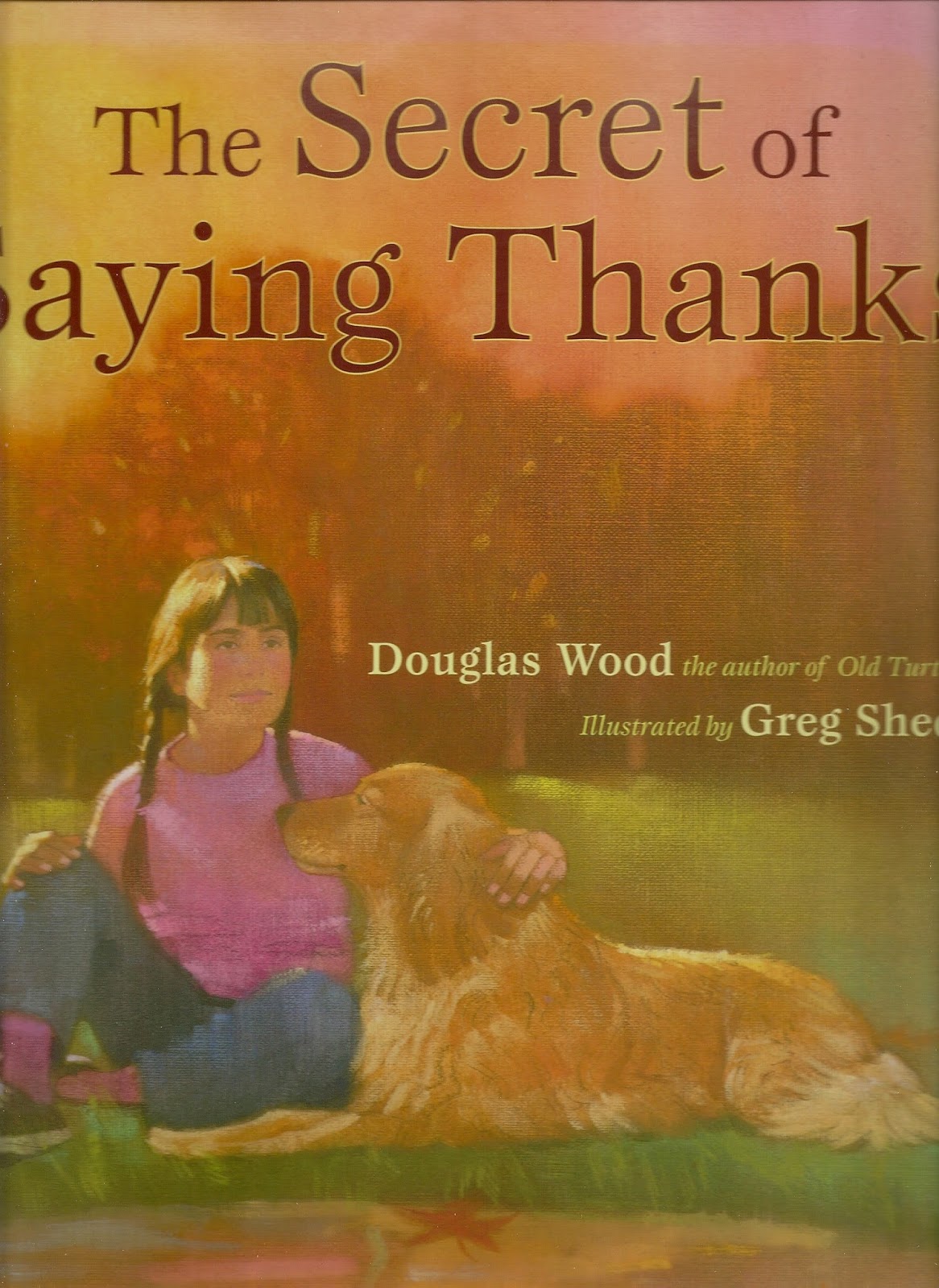
 
R The Secret of Saying Thanks, by Douglas Wood, insists that giving thanks makes us happy.  “We cannot feel thankful and unhappy at the same time.”  “We don’t give thanks because we’re happy.  We are happy because we give thanks.”  The book can be read in about 8 minutes.  With a small group sharing the pictures as you read is the way to go.  With a larger group, bring props (a big yellow paper sun, a flower, a tree leaf, a rock, a stuffed animal - a bird if you can find one, a shiny silver star cutout, a bottle of water, and a big red paper heart) to display or hand to people nearby as you read the pages about the things which lead us to be thankful.

R Jewish midrash includes several stories about how people responded to God’s dividing the sea for the slaves to walk through on dry land and then bringing it back together to drown Pharoah’s army.  It seems when they came out on the other side of the sea some of the newly free slaves complained that walking through the sea was scary and hard.  They could only think about how tired and dirty they were.  But Miriam and others, who were also tired and dirty, danced and sang songs praising God for the incredible miracle they had just experienced and their new freedom.  After describing the situation, ask which group was “right.”  Of course, both were at different levels.  Then ask who they would rather travel into the wilderness with.  Younger children will not be able to follow this.  But older children can be drawn into the possibility of rejoicing being more a matter of one’s attitude toward what happens than what actually happens.  They can be helped by parallel examples - maybe siblings who get similar sweaters from their grandparents.  One child is delighted and the other discards it as dumb.

R “Rejoice, Ye Pure in Heart” really needs a festal banner to be waved and walked through the congregation as the song is sung.  Make a flag banner featuring the word “Rejoice!” or select a praise banner from your collection.  Introduce it as a “festal banner.”  Before singing the hymn, practice the chorus once so even non-readers can sing along.  Also point out that the last verse is the same as the first and summarize the message of the two middle verses with reference to “in gladness and in woe” in verse 2 and the call to rejoice even at death in verse 3.

R Another way to use this hymn is to have the congregation sing just the chorus in response to each verse of Psalm 100.


John 6:25-35

R Maybe especially on Thanksgiving when there are other symbols around, it is hard for literal thinking children to make sense of Jesus’ talk about being the bread of life.  I’d save it for other days when there is time to unpack it in some detail.  For today, the bottom line is that as good as bread/food is, God’s love and forgiveness are better and more important. 

Sunday, June 24, 2012

Year C - The Third Sunday of Advent (December 16, 2012)


''' Just a reminder: next Sunday is Mary, Elizabeth and the Magnificat.  I’d tend to read them today for several reasons: 1. December 23 feels too late to be telling that story in the Advent run up to Christmas, and 2. Mary and Elizabeth’s rejoicing is a good companion to all today’s other text’s calls for rejoicing.  Go to Year C - The Fourth Sunday of Advent for a reading script and other ideas about exploring this story with children.

''' The shared themes of the first three texts for this week speak more clearly to children than does any particular text.  So, I’m making thematic rather than scripture based suggestions for all except the gospel reading.

Lighting the Advent candle:

If you use a pink candle in the advent wreath, briefly explain that it is the joy candle.  (ASIDE:  The candle is NOT pink because we hoped it would be a girl as one wit suggested!)

Statement to read while lighting the candle: 

If focusing on rejoicing:  God, sometimes the world feels dark and evil.  We light a candle today to remind ourselves that you are with us every day and love us with a powerful love.  So, even when things are awful, we can rejoice.

OR

If focusing on Mary:  Mary sang,Rejoice in the Lord for God has done and is doing marvelous things!”  We light this candle for Mary and Elizabeth and to remind ourselves to be as ready as they were to join you at work in the world.


''' Today children can rejoice with the following festive, non-Christmasy songs:


“O Sing to the Lord!” includes three verses of simple, repeated words set to a Brazilian folk melody.  Children enjoy the addition of a trumpet interlude before the last verse, “dance for our God and blow all the trumpets.”  For extra exuberance add streamer twirlers when this song is sung as the processional or recessional.

Sing “Dona Nobis Pacem” as a round both at the call to worship before you explore the day’s theme and at the benediction reminding worshipers of what they now know about peace and joy.

And of course there is “I’ve Got a Joy, Joy, Joy Down in my Heart” with verses such as “I’ve got the peace that passes understanding way down in the depth of my heart.”

If you project songs to sing, try this Go Now in Peace as a benediction.

''' If you are ready for a Christmas carol, try “Joy to the  World!”  The words are too complex for children, but with direction they can get the first line of each verse.  Before the congregation sings the carol, have them follow along in their hymn books as you point out these opening lines somewhat as follows:

Why can we sing “Joy to the World”?
1.      No matter how bad things might be at the moment, “The Lord is come”, i.e. God is with us.
2.      The Savior, not any king or ruler or bully, is in charge of the world.   (Who is the savior?  Jesus is!)
3.      Given that, we don’t have to get upset in our sorrows or caught up in all the bad stuff that happens.
4.      And, like all good last verses, this one is the summary.  We can rejoice and sing “Joy to the World!” because God rules the world with truth and grace.

''' Jewish midrash includes several stories about how people responded to God’s dividing the sea for the slaves to walk through on dry land and then bringing it back together to drown pharoah’s army.  It seems some of the newly free slaves complained that walking through the sea was scary and hard.  They could only think about how tired and dirty they were.  But Miriam and others, who were also tired and dirty, danced and sang songs praising God for the incredible miracle they had just experienced and their new freedom.  After describing the situation, ask which group was “right.”  Of course, both were at different levels.  Then ask who they would rather travel into the wilderness with.  Younger children will not be able to follow this.  But older children can be drawn into the possibility of rejoicing being more a matter of one’s attitude toward what happens than what happens.  They can be helped by parallel examples  - maybe siblings who get similar sweaters from their grandparents.  One child is delighted and the other discards it as dumb.  (If you and the children talk easily on the steps, this could be a children’s time.  It could also draw older children into the real sermon if presented there.)

It might be fun and instructive to devote sermon time to imagining “not rejoicing responses” Mary, Joseph, the shepherds and others in the story might have had.  All of them chose to rejoice, but might have responded differently.  Then, there is the innkeeper who wavered between “I’m just too busy” and “you’re about to have a baby?!  The barn is all I have, but you’re welcome to use it.”  As you talk about each character, lift the appropriate figure from the creche.

''' Many congregations have become sensitive to people for whom it is hard to rejoice at this time of year.  Remember that this group includes children as well as adults.  Children face the same problems that daunt the adults, but do so with different twists.  For one thing, they lack the experience of many Christmases that the adults can draw on to keep a sense of balance.  For another, they feel that as a child they should be totally into the season.  It feels even more unfair to them than to the adults that they are not going to have special gifts or fun family gatherings or decorations or…..

''' If you have a Chrismons tree, help the children find ornaments that are stars or have stars in them.  Explain that stars are happy, rejoicing lights.  No one ever sees a star and says, “Rats! Who needs a star?”  Star stickers are used for decorations.  You never get a star sticker and a frowny face sticker on the same paper at school.  Recall, if a child doesn’t beat you to it, the star of Bethlehem.  Describe it as the happiest star ever and proof that God’s light was coming into the world. 

''' “Fear not!” is another shared theme of these texts.  But the fears alluded to are fears that I will not be enough, that I will not be able to handle it, that war or economic disasters will sweep me away, etc.  These fears are different from the fears children face in very subtle ways.  Facing them requires a different kind of courage and understanding of what is feared.  I think the fears that children face are better explored using other texts at other seasons of the year.  So, I’d tackle this theme with and for the adults. 


Luke 3:7-18

''' The RCL schedules verses 1-6 of Luke 3 for the second Sunday of Advent and verses 7-18 for the Third Sunday of Advent.  I (and lots of scholars!) think these verses really belong together.  So I’m suggesting reading them all on the second Sunday.  To accommodate this, I’d move the texts about Mary and Elizabeth to this week where it fits nicely with all the rejoicing in the other texts.  Go to Year C - The Fourth Sunday of Advent for ideas for Mary’s story.  But, just so you can find ideas where you look for the text I am reposting the ideas about the combined John the Baptist text that are also posted on the Second Sunday of Advent.  The ideas for the Mary and Elizabeth story are posted on the Fourth Sunday of Advent.

''' Combine the 2 readings about John’s ministry.  As you begin, point out that when John grew up huge crowds followed him.  Invite the congregation to join you in reading about John and those crowds.  Assign different sections of the congregation to be the crowds, tax-collectors, and soldiers.  The Narrator, who is probably the key liturgist, and John read from the front.  Everyone will need a script.  Prepare John to read dramatically as if addressing a large crowd out doors.

''''''''''''''''''''''''''''''''''''''''''''''''''''''''

Luke 3:2b -17


Narrator:  God spoke to Zechariah’s son John when he grew up.  John was living in the desert.  So John went along the Jordan Valley, telling the crowds of people who came there to hear him,


John:  Turn back to God and be baptized! Then your sins will be forgiven.

Narrator:  Isaiah the prophet wrote about John when he said,
“In the desert someone is shouting,
‘Get the road ready for the Lord!
Make a straight path for him.
Fill up every valley
and level every mountain and hill.
Straighten the crooked paths
and smooth out the rough roads.
Then everyone will see the saving power of God.’ ”

Narrator:  Crowds of people came out to be baptized, but John said to them,

John:  You bunch of snakes! Who warned you to run from the coming judgment?  Do something to show that you really have given up your sins. Don’t start saying that you belong to Abraham’s family. God can turn these stones into children for Abraham.  An ax is ready to cut the trees down at their roots. Any tree that doesn’t produce good fruit will be cut down and thrown into a fire.

Narrator:  The crowds asked John,

The crowds: What should we do?

John:  If you have two coats, give one to someone who doesn’t have any. If you have food, share it with someone else.

Narrator:  When tax collectors came to be baptized, they asked John,

Tax-collectors:  Teacher, what should we do?

John:  Don’t make people pay more than they owe.

Narrator:  Some soldiers asked him,

Soldiers:  And what about us? What do we have to do?”

John:  Don’t force people to pay money to make you leave them alone. Be satisfied with your pay.

Narrator:  Everyone became excited and wondered, “Could John be the Messiah?”  But John said,

John:  I am just baptizing with water. But someone more powerful is going to come, and I am not good enough even to untie his sandals.  He will baptize you with the Holy Spirit and with fire.  His threshing fork is in his hand, and he is ready to separate the wheat from the husks. He will store the wheat in his barn and burn the husks with a fire that never goes out.

Narrator:  This is the Word of the Lord!

Congregation:  Thanks be to God!

Based on the CEV

''''''''''''''''''''''''''''''''''''''''''''''''''''''''

''' Revel in all the specific places and people in the opening verses.  Get out a map – or better yet a globe.  Locate your congregation on it.  Point out the places.  They are all right around present day Palestine.  Together pronounce the names of the people and insist that these were real people that we read about in history books.  Luke’s point and yours to the children is this is a real story about real people in a real place.  Children who have trouble sorting out fiction from non-fiction appreciate knowing that.  They also enjoy Luke’s point that with the choice of all those important people living in important places, God gave his message to nobody John who lived in an unnamed wilderness. 

''' Remember that children will hear the poetry about roads and mountains literally unless you direct them otherwise.  In a day when mountain top removal is an environmental issue it is easy for children to jump to wrong conclusions.

'''  “Repent!” is John’s favorite word.  He used it lots!  To help children understand and claim the word, point out the difference in being sorry and repenting.  Being sorry is feeling bad that you did something wrong or hurt someone.  Repenting is doing something to make sure you never do that again.  Repenting is making changes in what we do.  It is much easier to feel sorry about something than to repent it.  John is not even a little interested in people feeling sorry about bad things they were doing.  He wanted them to change.  He would want the same for us this Advent.

After talking about repenting, challenge children to draw or write about repenting they plan to do in the coming weeks.  Invite them to put their art in the offering basket as a way of offering it to God and asking for God’s help.

''' To explore John’s call to repent and be baptized, explore the question “Do you renounce evil and turn toward Jesus Christ?” in many baptism and confirmation rituals.  To describe how we actually do this, sort a collection of cards or small posters into “evil” and “turn to Jesus” piles.  Write on each card something like Mine!, I want it!, Give me!  Me first! You stink!  May I help?  Can we share this? What would you like? You first!  I think you are special! Can we do this together?...  Briefly describe what working to say or not say each of these things is a way of keeping a promise to God. 

''' Sing your way toward repentance with “Lord, I Want to Be a Christian.”

Friday, September 16, 2011

Year A - Proper 23, 28th Sunday in Ordinary Time (October 9, 2011)


Exodus 32:1-14
  
L Spray paint gold a plastic cow from the farm toys.  Before reading this story add it to the Moses display and encourage worshippers to listen for one in the story.  (The golden calf in the picture is a wonderful gift my preacher husband received from a Kerygma Class.  Sorry you don’t each have one of them, but thought you might enjoy seeing this cool one.)

To explain the problem with the golden calf to children start by pointing to commandment #2 of the Ten Commandments.  Reword it, “I am bigger than anything you can imagine.  So, don’t make anything that you think looks like me.  You will get it wrong.”  Laugh about God not being a cow.  But then, admit that you don’t think the people were that dumb.  They just wanted something they could see and touch and decorate with flowers and dance around and eat near to make them feel that God was with them and that they understood God.  A god they could not see was just too scary. 

Sing “Immortal, Invisible God Only Wise” to celebrate God who is “more” than the Hebrews in the desert or we can imagine.  Before singing it, point out the big words in the first lines and rephrase them, “God who lived before the universe was created and will still live after the universe dies, God who is invisible, God who is wiser than any person who ever was or ever will be.  God, you are so amazing we can’t begin to understand you.”

J Children are fascinated by the story of Moses talking back to God and of God changing plans based on what Moses said.  It gives them permission to be honest with God.  They can tell God what they don’t like.  God can take it. God listens.  God may even change plans.  Older children appreciate pairing this story with Jesus’ prayer in the garden of Gethsemane.  God heard Jesus’ prayer, but did not save him from dying on the cross.

L Today’s Lord’s Prayer connection is “lead us not into temptation.”  The people were scared.  They were out in the desert and Moses, the leader who had led them there had gone up the mountain to talk with God.  He had been gone a really long time.  They wondered what if he never came down, what if he had died up there?  Moses was the one who talked with God for them.  What would they do without Moses?  What if they were out there all alone out here in the desert.  They were scared, really scared.  So, they forgot (or decided to ignore) Commandment #2.  They thought if they had something they could see maybe that could be as good as seeing Moses who talked to God.  Create a responsive prayer citing a variety of scary situations (when we are afraid we won’t get what we want, when we are afraid others don’t like us, when we are afraid others will hurt us….).  End each petition “when we are scared…” to which the congregation responds with “lead us not into temptation.”  If it works, move from this prayer into praying the entire Lord’s Prayer in unison.


Psalm 106:1-6, 19-23

L Verses 6, 19-22 can be a responsive prayer of confession with the congregation praying, “Lord, we too are guilty” after each verse.  Before praying this prayer together talk with the children.  Briefly tell the gold calf story if it has not already been told.  Then, note that none of us have ever made a Golden Calf to worship, but that we have frequently decided that what we want is more important than what God wants. 
We think we have to go to a certain spend the night party
– even if it means we won’t be at church the next morning. 
We think we just gotta sit at the lunch table with the popular crowd
-even it means deserting less popular friends. 
We cheat (steal the answers) on a test we just have to pass. 
Each time we do that we are just like the people who made a calf to worship instead of God.  Point out the structure of the prayer and invite them to join you in admitting to God what we do and remembering that God loves and forgives us.  (Younger children will have trouble making the connection between the calf and our current idol worshiping activities.  But, this conversation introduces them to the possibility of identifying ourselves and our activities with those of people in the Bible.  We do that frequently in worship.)

JL JL JL JL JL JL JL JL JL JL JL JL JL JL JL

Prayer of Confession

Leader:         Both we and our ancestors have sinned;
we have committed iniquity, have done wickedly.

All:                  Lord, we too are guilty.

Leader:         They made a calf at Horeb
and worshiped a cast image.

All:                  Lord, we too are guilty.

Leader:         They exchanged the glory of God
for the image of an ox that eats grass.

All:                  Lord, we too are guilty.

Leader:         They forgot God, their Savior,
who had done great things in Egypt,
wondrous works in the land of Egypt,
and awesome deeds by the Red Sea.

All:                  Lord, we too are guilty

Assurance of Pardon

Leader:         Just as Moses pleaded with God to forgive his
                        people, 
so Christ stands with us. 
                        We are forgiven.

All:                   Thanks be to God!

JL JL JL JL JL JL JL JL JL JL JL JL JL JL JL


J There are lots of feasts in the following texts.  If you will be building worship around them, find a place setting in clip art to shrink very small and print by each item that includes a feast in the printed order of worship.  Before the Call to Worship, tell the children that there will be lots of feasts in today’s worship.  Name a few of them, e.g. a wedding feast, a feast to which all the people in all nations are invited, a feast that is eaten in the presence of enemies, and (if you celebrate the sacrament today) a feast they will actually eat.  Point to the icons in the printed order of worship telling the children that it is a treasure hunt.  Their challenge is to find the feast in each marked reading, song or prayer.

Simply identifying the feasts may be all you want to do with the children this Sunday.  The Bible is filled with wonderful, child-friendly feast stories – but these are not among them.  These feasts are filled with difficult details and are described to make points that are not significant to children. 


Isaiah 25:1-9

Understanding this psalm requires either the knowledge of the destruction of Jerusalem or the experience of having lived in a city that was destroyed (perhaps in natural disaster).  In communities with the latter experience this can be unpacked as the same kind of promise for the future that it was to Isaiah’s original readers.  But for luckier children this psalm requires more explaining than its meaning for them justifies. 


Psalm 23

J This psalm is included today because of the feast images, “You prepare a table before me in the presence of my enemies…my cup overflows.”  The first thing to clarify with the children is that in this case a cup that overflows is not a disaster (which overflowing cups usually are for children) but a promise of unlimited seconds of your favorite drink.  Once that is cleared up, children can be pointed to the feast that can be enjoyed even if there are enemies or big problems around.  They need help getting to the psalmist’s message that God loves us and takes care of us even when things are hard.  North American children looking forward to Thanksgiving feasts can be reminded of early Thanksgiving feasts that included Native Americans and settlers among whom there was uneasy peace. 

J Psalm 23 shows up frequently in worship.  Go to Year A - Fourth Sunday in Lent for Psalm 23 hymns for children and a coloring sheet activity.


Philippians 4:1-9

Children are quickly lost in the generalities of this list of exhortations.  For them it is probably best to select one or two for fuller attention and save the others for another day.  My choice would be the call to “Rejoice!”  If you have banners or posters bearing the word, bring them out this week.  Ponder the fact that it is possible to remember God and trust God when we are frightened, when we are sad, and even when we are happy (strangely, it is sometimes harder to do when we are busy being happy).  This gives us a wonderful deep-inside-us joy.  If the Hebrews had remembered this joy, they would not have built the gold calf.  If the first workers in the parable had this joy, it would have been easier to be happy for the workers who got a day’s wage for an hour’s work.


J REJOICE benediction Give children business cards bearing the word REJOICE to pass out to worshipers around them.  Suggest that people put a card in their pocket, purse, or bookbag where it can surprise them occasionally.  Then, send them out with charge to rejoice, because God is with them.

J Rejoice hymns

“I’ve Got a Joy, Joy, Joy Down in My Heart” could be a congregational hymn or be talked about and sung during a children’s time.
I’ve got a joy, joy, joy, joy down in my heart…
I’ve got the wonderful love of my blessed redeemer way down in the depths of my heart…
Or the simpler “I’ve got the love of Jesus, love of Jesus down in my heart”
I’ve got the peace that passes understanding…
Even “if the devil doesn’t like it he can sit on a tack…”

“Rejoice Ye Pure in Heart” (Point out all the “rejoice!”s in the chorus and encourage non-readers to sing them.)

“For the Beauty of the Earth” names specific recognizable parts of life in which children and adults can rejoice.


Matthew 22:1-14

One commentator quipped that this parable should be “at least PG-13” rated.  It is filled with details that on the surface don’t make sense.  It is not a story but an allegory and allegories are almost impossible for children to interpret.  But even if they understand allegories -- if God is the king why does God kill the unresponsive guests and burn their city and why does God send away the poor man  because he wasn’t properly dressed?  This is definitely not a parable to dramatize or present creatively in the hope that every worshiper will catch every detail!  Instead, it is probably best to pick out one or two elements of the parable to explore with children. 

J On the simplest level, insist to the children that the church is God’s feast or God’s party.  They have been invited.  They can join in worship, classes and clubs and teams, service ministries, and fun.  It is their choice if they come.  If they, like the first guests, don’t join in, they will miss out.  (OK, it is not always their choice to come, but activities beyond Sunday morning often are J

J Talk about birthday parties.  Ask what the children do at such parties and who they invite.  Then, talk about the guest list for this feast.  It includes everyone, both the good and the bad.  God invites them all to the party.


J Oh the Places You’ll Go!, by Dr. Seuss, is usually a graduation gift.  Today read or quote only the first four pages that point out that we are each in charge of where we go and what we do and don’t do.  Enjoy the rhymes and connect the choices in them with the choices of the guests invited to the wedding feast.  They could go or stay away.  Insist that Jesus’ invitation to be part of all the things we do together as a church is one of the best invitations we will ever get.  Urge worshipers to use their brains and their feet to respond to that invitation.

J Reread verses 11-13 about the improperly dressed guest with a surprised face.  Admit “that doesn’t sound like God or Jesus.”  Then point out that sometimes it is very important to know little facts about life when the Bible was written.  Explain that in that day the host provided clothes for the guests who came to the wedding.  So, the poor man would have been offered a nice wedding robe, he just didn’t want to wear it.  He came to the party and was eating the food, but he refused to do his part by wearing a wedding costume.  That wasn’t right!  Read verses once again. 

BE CAREFUL. The summary of this discussion is tricky.  It is easy to conclude something like, so do what you are told and participate well when you come to church.  Not good!  Jesus is urging people who come to his feast, to follow his “party rules” like love God and love each other.  Jesus doesn’t want us to just come to get the goodies or do the fun stuff, but to really join in with people around us.  It is a subtle, but important difference.