Showing posts with label Creation. Show all posts

Friday, October 5, 2012

Year B - Proper 24, 29th Sunday in Ordinary Time, 21st Sunday after Pentecost (October 21, 2012)


Children's Sabbath Logo
F This is the official Children’s Sabbath Weekend.  Go to Children's Sabbath on this blog for general ideas about celebrating this event and a link to the massive Children's Sabbath manual.  Today’s texts offer fine connections to it for adults, but are a little harder to use as connections with children.  Two possibilities:

1. Invite children to illustrate Psalm 104 or one of the creation hymns.  Use their illustrations on the cover and/or in the margins of the printed order of worship.

2. Describe ministries in which your congregation acts as servants to children in need, e.g. one local church packs small bags of food to send home on Fridays with children who depend on school meals for food and would probably go hungry on the weekend without these stashes.


Job 38:1-7, (34-41)

F Before reading today’s text from Job, review the story to date.  Read verses 1-3 pausing to restate the situation and point out that the rest of the reading is a list of questions God asks Job.  As you read emphasize the question words - who, where, how, etc. and pause briefly between each question to separate them. 

It would be possible to have the questions read by an invisible reader over the sound system.  A booming male voice would keep with the dramatic style of this story.  But, a motherly "let's talk about this" voice might be an interesting alternative.  Whichever voice is used, it will suggest to literal listeners that God speaks in a loud disembodied voice.  So, if you do this, be sure to address the possible misunderstanding immediately after the reading.

F Focus on all the questions.  Pause after reading each one to put it into your own words.  Ponder together what God wants Job to think about.  Point out that sometimes we think we are smart and have everything figured out, but we don’t.  God is bigger than anything we can even imagine.

F “Immortal, Invisible, God Only Wise” is packed with impossibly long words used to describe God who is more than anything we can image.  So before singing the hymn together, invite worshipers to follow along in their hymnals as you read through it savoring selected words with brief comments.  For example, “Immortal – that means God was never born and never dies.  God always was and always will be.  Invisible – we can’t see God.  God only wise.  Only God knows and understands everything completely….”  Don’t get bogged down in any one phrase.  The point is to paint a picture of God as more than we can imagine.  Once you have read through all the verses, invite worshipers to sing to this amazing God.

Look below in the resources for Psalm 104 for more child-friendly hymns praising God the creator who spoke to Job.

F Highlight the opening of the Lord’s Prayer – “Our Father, hallowed be thy name.”  Define the word “Hallowed” with reference to the questions God asked Job.  God is different from any other being in the universe.  God made everything and understands everything and loves everything.  If the word Holy is carved or stitched into the front of your sanctuary, point it out and connect it to the word “hallowed.”  If you sing “Holy Holy, Holy” today connect those “holy”s to this “hallowed”.  Pray the Lord’s Prayer together immediately after this discussion.

F Possibility:  Add Job’s response to God in Job 48:1-6 to today’s reading to complete the conversation.  When we do that we (and children who don’t remember much from one week to the next) hear immediately that Job understood God’s questions and got God’s point.  Job admits that he is human and not God.  He also appreciates that God heard his questions and accepted them.  Going forward God and Job can talk honestly about whatever is important to them AND Job knows that God is always God and will always be more than Job can fully understand. 

If you do this, consider reading Psalm 8, possibly using the script offered last week at Proper 22 (Year B).  It focuses less on the Creator and more on the relationship between the Creator and people.

F This is the third reading in a lectionary series.  If you have not read the earlier posts go to Proper 22 (Year B) and Proper 23 (Year B)  for more ideas related to exploring Job in congregations that include children.


Psalm 104:1-9, 24,35c

F In the NRSV almost every line begins with the word YOU.  Before reading the psalm, point this out and note that the YOU is God.  The psalm writer is talking to God.  Encourage children to listen for all the YOUs to learn what the psalmist was saying to God. 

F Creation, by Gerald McDermott, is a beautiful picture book based on the first chapters of Genesis.  It can be read aloud in about 3 minutes.  With a smaller group of children seated together, I would read the book aloud and expect to be interrupted as children point out some of the creations they see.  If you use projections, consider buying a copy of the book to scan and show as it is read.  (If you do not share your scan with anyone else, I am told this not copyright infringement.)  The last page of the book says “I am all this.  ALL THIS I AM.” which is a good connection to what God said to Job.

F Child friendly hymns praising the God of creation and connecting to Job include:

“I Sing the Almighty Power of God”
“All Things Bright and Beautiful”
Both of the above praise the creator who by rights can ask Job the questions God does.  Job could have sung either after his encounter with God.

“Earth and All Stars”
Describes the partnership between God the creator of all and we humans who are created in God’s image.  The repeated chorus can be sung by even non-readers.


Isaiah 53:4-12

This is a very complex passage for adults to read and understand.  It is filled with vocabulary and ideas that are unfamiliar to most children.  If you read it hoping the children will understand at all, try the Good News Bible translation which at least uses words children recognize.  Or read it from another translation mainly for the adults.


Psalm 91:9-16

F This is a tough psalm for adults who are aware of Job-like suffering all around them to understand and almost impossible for literal thinking children to grasp.  I’d skip it today given the other texts.

F Go to 26th Sunday in Ordinary Time (Year C) for ideas for singing 3 hymns that carry message of this psalm better that the psalm itself does.


Hebrews 5:1-10

F This letter is written to the Hebrews, people who knew exactly what a priest was and did.  They understood the writer’s message immediately.  It made deep sense to them.  But, High Priest is not the best name with which to describe Jesus to today’s children.  For them a priest is what you call the staff  leader in some Christian denominations.  Still, some older elementary school children are interested in what the ancient priest did and can hear how Jesus is like that priest.  But, they need a detailed explanation of those priests and the sacrificial worship they led.  Even then, they have trouble.  The practice of killing an animal to tell God you are sorry does not make sense to them.  They can’t imagine that God would be pleased by that or that God would require that in order to forgive us.  The only way to present it is as something people used to think that we now think differently.  Compare it to the fact that people used to think the earth was a flat pancake, but we now think it is round ball. 


U HIGH PRIEST U

F After exploring what a high priest is and does, add the title High Priest to your Hebrews poster of words about Jesus.  Draw a cross at the beginning and end of the word.


Mark 10:35-45

F This is a good story for a children’s class to pantomime as it is read or to present as a play.  Jesus sits in the middle of the chancel.  James and John approach from one side.  The liturgist acts as the narrator.  The “other disciples” could be imaginary or could provide roles for a bunch of children so that there is a role for all in the class.

F Where you sit at the table is important to children.  They want desperately to sit near Grandma when she visits, to not be the one who has to sit on the piano bench or at a kid’s table when company comes, and to not have to sit with “them” at lunch at school.  They know that the other disciples were not so much shocked at James’ and John’s request, but they were upset that those two got their request in first.

F This story asks us to explore what it means to be a leader.  Children want to be the line leader, the class president, the team captain, etc.  Leadership is presented to them from an early age as being desirable.  It brings honor, titles, and special privileges.  Jesus has a different definition.  Jesus agrees that it is good to be a leaders but says that a leader is a person who puts the needs and wants of others before his or her own.  Children struggle with this difference in definition.
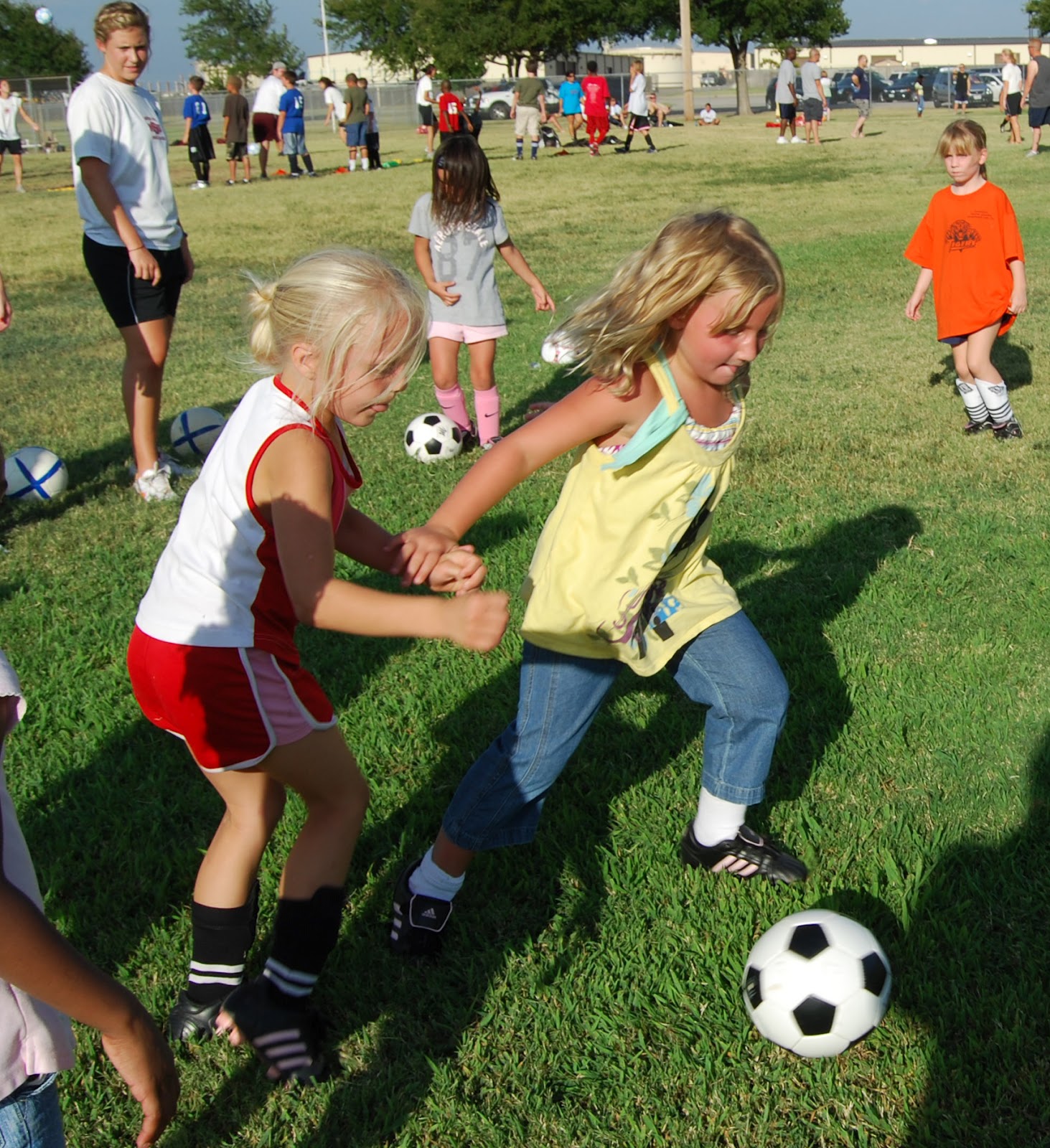
Much time is spent by coaches of children’s sports teams teaching them to play as a team.  It is hard for children to learn the value of passing the ball so another player can score rather than holding on to the ball desperately trying to make the score on their own.  Leaders are people who give up their own glory for the good of the team.

F God Said Amen, by Rabbi Sandy Sasso, tells of two kingdoms one with water but no oil and the other with oil but no water.  Unfortunately, the rulers of the two are so intent on being the first to be approached by the other that nothing happens.  They finally turn into stone mountains while they wait for the other to make the first move toward sharing.  Two children looking for the missing rulers find each other and work out a sharing deal that benefits all. They are real leaders who are willing to look for answers in new places.  It takes 10 minutes to read aloud.  For a shorter presentation select one or two pictures of the stubborn Prince and Princess to show as you tell the story of their leadership failure in your own words.

F Tell stories about leaders who have risked or suffered for others.  Tell about Martin Luther King who was killed by a person who did not like what he was saying, Nelson Mandela who spent 25 years in prison because he stood up to oppressive leaders in South Africa, Aung San Suu Kyi who spent 15 years in house arrest for standing up to oppressive leaders in Myanmar, etc. 

F I heard this supposedly true story about leadership attributed to Kenneth Bailey:  When King Hussein of Jordan was told that a group of young officers were at that moment meeting in their barracks to put final touches on a coup and was asked whether they should all be arrested and/or killed, his response was to order a small helicopter, fly to the roof of the barracks, tell the pilot to leave immediately if he heard gunfire, and then to go down the stairs and walk into the room where the officers were gathered.  He told them that if they did what they were planning, there would be civil war, chaos, and that hundreds maybe thousands would be killed.  Rather than risk that, he suggested that they shoot him now.  That way only one person would die.  The officers all knelt, kissed his robe, and re-swore loyalty to him.

F Songs about being a servant leader that children can sing:

“Brother sister let me serve you, let me be as Christ to you, …let me have the grace to let you be my servant too”

“Jesu, Fill Me with Your Love”

Tuesday, November 29, 2011

Year B - Baptism of the Lord (January 8, 2011)


The Baptism of the Lord offers an excellent opportunity to explore the sacrament of baptism with worshipers of all ages.  Try some of the following:

a One minister emailed the entire congregation asking them to talk about the baptism of each person in their household before coming to church on this Sunday.  Those stories formed a personal context for each worshiper as they explored baptism together during worship.

a If you hang curtains of blue ribbons in the doors to the sanctuary on baptismal Sundays, hang them today in honor of Jesus’ baptism.  At the very least they provide an introduction to the story of Jesus’ baptism that connects his baptism to that of each worshiper.  It is also a chance to suggest to worshipers that as they pass through those curtains every time they appear people can remember and thank God for their own baptism.  In the charge and benediction, remind worshipers to do so as they leave the sanctuary today.  If you have a children’s time, explain the practice and lead the children out the doors and back through the curtains. 

a During the sermon walk through and comment on your congregation’s baptismal rite.  Even use a doll and adult volunteers to take the various roles in both infant and adult baptisms. 

a Today’s texts particularly suggest reading and commenting on the prayer over the water in the traditional rite for baptism.  Most children and many adults think of that as “the long baptism prayer” that gets in the way of getting to the main water event.  Take time to read through the prayer pointing out all the water references (God moving over the water at creation, God floating Noah on the flood waters, God opening the sea for the Hebrews to pass out of Egypt to freedom, and Jesus’ baptism in the Jordan).  If you have pictures of the Bible stories, work with worshipers to connect the pictures to the phrases in the prayer.  Ponder the mysterious way this water of our baptism connects us to and makes us one of all the people of God of all ages. 

a Invite the congregation to recall and celebrate their baptisms by coming forward, dipping their fingers into the baptismal font, and saying silently, “I belong to God,” “I am baptized” or some similar phrase. 

a If you include renewal of baptism in the service and your congregation practices infant baptism, provide a chance for parents and the congregation to recall and renew their vows to the children.  Parents can stand in place with their children to hear and answer the questions.  This is an opportunity for children to hear their parents renew their commitments to them, for preachers to offer a few specific suggestions about how to keep those promises to growing children, and for parents to reclaim their commitments made to infants in the presence of those children as they grow.  Follow it with time for hugs – or passing the peace, if you want to stay within the liturgy.

a Sing a baptismal hymn for Jesus today.  If your congregation regularly sings a given hymn or chorus at baptisms, talk about its meaning, then sing if for Jesus today.  Two baptism hymns that are child accessible can be sung and explored as follows:

“Child of Blessing, Child of Promise” -  Read and comment on the words of verses 3 and 4 before the congregation sings the song.

“Christ When For Us You Were Baptized” – To point out the connection of the first three verses to the story of Jesus’ baptism in Mark, give each child a sheet of paper with the hymn words printed in the middle.  Direct them to underline all the things they hear as you read Mark 1:9-11.  Then, challenge them to illustrate those things around the edges of the sheet.  Invite them to post their sheets at an agreed upon place (baptismal font, altar rail, door to sanctuary, even your office door) at the end of the service.  The reading could be done as a children’s time with the leader pausing in the reading to be sure everyone catches all the connections or it could be tied to the reading of the gospel for the day.  In either case the congregation should sing the song shortly thereafter.

a Water Come Down: the Day You Were Baptized, by Walter Wangerin, Jr. describes how sun, cloud, rain, wind, and water are involved in a child’s baptism.  The idea is lovely, but a little over the top.  The whole universe seems to revolve about the child rather than the child taking his or her place among God’s people and the universe.  One way to use it in worship would be to read only the end of the book beginning with “Your family was there that holy day…”after walking through your congregation’s infant baptism rite.  Can anyone point us to other good baptism books to read in worship to children?

a Go to Year A - Baptism of the Lord to find more suggestions.


Genesis 1:1-5

On the first Sunday of Epiphany-tide, celebrate God’s first creation – light.

a Create an impromptu litany by inviting worshipers to name different sources of light.  As each is named the whole congregation replies, “And God saw the light and it was good” or “Thank God for light.”  Possibilities include the sun, stars, fire/campfire/fireplace/candles, search light, light house, flashlight, nightlight, light sticks, lightning, lightning bugs, and more.      

a Invite the congregation to walk through 24 hours of light with you.  Start imagining a local sunrise, describe the natural light at different times of the day, and name some of the human-made sources of light used at different times of the day (e.g. the oven light to check progress of a meal being baked).

a Talk about all the candles used in worship throughout the year.  If possible gather them all into a display at the front.  Light each one as you identify it and its use.  Include Advent candles, a Christ candle, the small candles used during candlelight services, the candles used every Sunday in the worship center, baptismal candles (if they are part of your tradition), and any other candles you use.

a On the Baptism of the Lord Sunday, this text reminds us that just as God provided light of the sun, God also provided Jesus who is also light for the world.  Because this metaphor is a stretch for literal thinking children, take time to explain how Christ is the light of the world as much as the sun is.  (Jesus lights up the world with God’s love and helps us see how God intends for us to live.  When we see Jesus we can see what we want to do and be.)


Psalm 29

This psalm celebrates the power of the LORD.  To emphasize that power, invite the congregation to join reading the psalm with one side of the congregation repeatedly asking “How strong is the LORD?” and the other replying with the verses of the psalm.  Or, the choir could pose the question with the congregation answering.

hhhhhhhhhhhhhhhhhhhhhhhhhhh

Psalm 29

All:                   Ascribe to the Lord, O heavenly beings,
ascribe to the Lord glory and strength.
                        Ascribe to the Lord the glory of his name;
worship the Lord in holy splendor.

Group 1:          How strong is the LORD?

Group 2:          The voice of the Lord is over the waters;
the God of glory thunders,
the Lord, over mighty waters.

Group 1:          How strong is the LORD?

Group 2:          The voice of the Lord is powerful;
the voice of the Lord is full of majesty.

Group 1:          How strong is the LORD?

Group 2:         The voice of the Lord breaks the cedars;
the Lord breaks the cedars of Lebanon.
He makes Lebanon skip like a calf,
and Sirion like a young wild ox.

Group 1:          How strong is the LORD?

Group 2:         The voice of the Lord flashes forth flames of fire.
The voice of the Lord shakes the wilderness;
the Lord shakes the wilderness of Kadesh.

Group 1:          How strong is the LORD?

Group 2:          The voice of the Lord causes the oaks to whirl,
and strips the forest bare;
and in his temple all say, “Glory!”

All:                   The Lord sits enthroned over the flood;
the Lord sits enthroned as king forever.
May the Lord give strength to his people!
May the Lord bless his people with peace!

                                                                                                NRSV

hhhhhhhhhhhhhhhhhhhhhhhhhhh

a Go to Year A - Baptism of the Lord  for suggestions that dramatize the storminess of this psalm.


a Rainbows, especially double rainbows, are moments of grace.  They are water plus light, also the aftermath of a storm (like Psalm 29).  Does anyone know any appropriate rainbow books or songs?


Acts 19:1-7

This is not the easiest baptism story for children.  I’d focus on the baptism of Jesus in the gospel and the connections to it in the other readings for the day.

The Roman Catholic and Episcopalian lectionaries use Acts 10:34-43 (Paul summarizes the good news about Jesus to Gentiles).  That is the Year A text for the RCL.  Go to Year A - Baptism of the Lord  if you use this text this year.


Mark 1:4-11

a Introduce the Gospel According to Mark.  Point out that it was the first gospel written and is the shortest gospel.  Explain that we will read almost every verse in Mark during the coming year.  Locate it in the big pulpit Bible.  Even give children bookmarks to place at the beginning of Mark in their own Bibles.

a If you used a shepherd figure from the Christmas crèche to stand in for John the Baptist during Advent, display it again.  In your own words remind worshipers of the details about John in verses 1-7 and his message from Advent.  Then read verses 9-11.

a Highlight the words from heaven.  Point out that Jesus hadn’t said anything important, healed anyone, or done anything special at this point.  But, God loved him.  There is lots of pressure on even young children to succeed at all sorts of things today.  Counter this pressure with the assurance that just as God loved Jesus from the beginning, God loves each of them.  If your congregation baptizes infants, point to the fact that while they were just babies and didn’t even know what was going on, God, their parents, and the congregation loved them and claimed them as their own for all time.

Wednesday, May 18, 2011

Year A - Trinity Sunday (June 19, 2011)

Intersecting circles
forming triangle in middle
Trinity Sunday calls us in two slightly different directions.  It is an opportunity to tell the children about the trinity which is often referred to in worship, but seldom explained.  Fairly simple introductions of the Trinity and highlighting its use in worship helps.  But, Trinity Sunday is also really “God Sunday,” an opportunity to celebrate the mystery of God that is more than we ever fully understand.  Both are important to children.

3 leaf clover
p Introduce the trinity.  Most children know “God and Jesus,” but fewer hear much about the Holy Spirit – unless they heard the word during Pentecost celebrations last week.  So the task is to add the Holy Spirit and to tie all three together.  One way to begin is with trinity images.  Point to trinity images in your worship space and/or show one or more of these images.  Identify the three separate parts that are bound together, e.g. each
Trinity candle with 3 wicks
leaf of the clover is a leaf and only together are they a clover.  Name the three persons and briefly mention things we know about each one.  Early in the service challenge worshipers to be alert for “father, son, and holy spirit” in your songs, prayers, and stories today.  Even fill your pockets with wrapped candies for anyone who can tell you as they leave the number of those references in today’s worship.  

p If you regularly use musical congregational responses that name the trinity (The Doxology, Gloria Patri), interrupt after they are sung today.  Ask, “What did you just sing?”  Then, briefly walk through the words defining difficult words and explaining the meaning of the whole song as sung where it is.  Then, invite the congregation to sing it again.  (Do warn the musicians of your plan.)

p Celebrate God who is more than we ever understand.  Many children assume that the adults all know everything there is to know about everything – including God.  If during their childhood they are told repeatedly that this is not true, when they begin asking important questions about God they will know they are not being outrageous, but doing what everyone does and has done for years.  That makes a big difference.  So, today celebrate both what we know about God and the God who is more than we can ever understand.  The Roman Catholic lectionary for the day offers God’s name, “I am who I am, I will be who I will be,” from the burning bush as the Old Testament reading for the day.  Today is a good opportunity to ponder that name.

It is also a good day to cite the unanswerable questions people of all ages ask about God, such as but definitely not limited to

-          What was God doing before God created the world?
-          How can there never be a time before or after God?
-          How can God pay attention to each person in the world all the time?
-          Why did God create rattlesnakes and mosquitoes?

p If there is a conversational time with children, gather “I wonders” about God.  Begin by telling some of the things you wonder about.  Invite them to tell some of the things they wonder about.  Be sure all worshipers knows that no honest “I wonder” is too funny or too bad to be pondered.

p To explore the fact that our understanding of God changes and grows, share some of your “used to thinks” about God and tell what you now think and how the change occurred.  For example, I used to think God was a man but now think God is neither a man nor a woman.  Also, express the expectation that what you now think may become a “used to think” in the future.  (This could be done in a children’s time, but if it is done as part of the real sermon, children realize that you are talking to the adults too and expect their ideas about God to change and grow.)

p Sandy Sasso’s beautifully illustrated book In God’s Name tells that after creation all animals had names.  But God did not.  So, all the animals came up with their own name for God, none of which was complete without the others.

p “Immortal, Invisible, God Only Wise” is filled with long complicated words that describe God who is more than we can fully understand.  If this is pointed out, children enjoy all the impossible words praising God who is impossible for us to understand.  Before singing, point out and define the first few words of verse one – immortal means God lives forever, invisible means we can’t see God.  Then ponder the meaning of the first phrase of verse 2 (“Unresting, unhasting and silent as light”).  Finally, challenge worshipers to pay attention as they sing to what it is trying to say about God.

p “Holy, Holy, Holy” is often sung.  Before singing it today, define the word holy (most special and important, awesome) and briefly walk through the verses.  This helps children learn the hymn and makes all worshipers pay better attention to what they are singing.
1.      We praise God
2.      Everyone in heaven praises God
3.      Even though we do not fully understand God, we praise God
4.      Everyone and everything on earth praises God


Genesis 1:1 – 2:4a

p In advance, ask the children to help you create a processional reading of this scripture.  Ask them to prepare large poster board illustrations of things God made and to mount them on dowels.  As the accounts of the days are read, children carry in the posters for that day down the central aisle.  At the conclusion of the day, those children say, “And there was evening and morning, the first/second…. day.”  Children remain at the front until the entire week is read.  This could be done by as few as six children or by as many as are available and fit in the space.  With fewer children the last day’s posters could include pictures of many kinds of critters.  If there will be lots of children, each child may make a poster of a single critter of their choosing.  Singing a creation hymn immediately following this processional reading gives the children time to return to their seats.
Day 1: day and night (blank black and yellow shapes)
Day 2: the sky (sky blue shape – with a rainbow if someone insists)
Day 3: division of land and seas (big planet earth) and creation of plants
Day 4: the sun and the moon and stars
Day 5: water creatures and birds
Day 6: animals and people
This is a project for several church classes for several weeks.  One week will be needed to make the posters.  One rehearsal will be needed just before the service.  And, adult help getting everyone started down the aisle in correct order is essential.  It is not a small effort, but both children and adults enjoy reading the familiar story this way and the children feel they are definitely part of the worshiping community.

p Give the children an In the Beginning God Created worship worksheet on which to draw pictures of each thing created on the day it was created. 

 
p There are several DVDs and even CDs available of James Weldon Johnson’s poem “The Creation” which retells the creation story from an African American perspective.  It is also presented in a picture book:  The Creation (ISBN 9780823412075).

p Pair the creation story with Psalm 8 to explore our place in the world at the beginning of summer and Ordinary Time.  During summer children generally spend more time outside.  Challenge them to take care of God’s world.  There are lots of things they can do, e.g. not toying with or hurting the critters and plants where they play, not leaving trash (dropped candy or gum wrappers!), leaving every place we go a little better than we found it, etc.  During Ordinary Time in worship we focus on learning and growing as disciples and a church.  This pair of texts tells us we are created in God’s image, said by God to be good, and are given the task of care for the world.  That is a good start for Ordinary Time.

p Hymns to God the Creator that children especially enjoy:  

-          “All Things Bright and Beautiful” may be familiar and is filled with familiar, concrete words about creation.

-          “Earth and All Stars” has a repeated chorus.  Children enjoy calling on very modern things to praise God.

-          “All Creatures of Our God and King” has a familiar tune, the names of lots of animals, and repeated “alleluias.”


Psalm 8

p Read from Today’s English Version which uses vocabulary children understand more readily – “Lord” instead of “Sovereign,” “greatness” instead of “majesty,” and the moon and stars that you “made” rather than “established.”  Most adults will not notice the difference, but the children will.

p To explore our relationship with God and our place in the world, read “Partners,” a midrash about the creation story in which God introduces people to their role as God’s partners.  The final definition of partner is “…someone you work with on a big thing that neither of you can do alone.  If you have a partner, it means that you can never give up, because your partner is depending on you….”  Find this two page story (read aloud in 3 minutes) in Does God Have A Big Toe? By Marc Gellman.


2 Corinthians 13:11-13

p Paul concludes his letter to the Corinthians who tended to fight with each other about almost anything, “agree with one another, live in peace.”  That is good advice on Trinity Sunday when we celebrate the mystery of God.  The blind men exploring the elephant story fits well here.  If those blind men talked to each other about what each one had learned about the elephant rather than fight insisting that only what they knew about the elephant was true, they would learn a lot more.  Likewise if we talk about all the different things we know about God, we will learn more about God than we will insisting that only what we know is true.

p Use verse 13 just before the benediction to do a little worship education.  Note that Paul ends this letter with the same words we often use at the end of a worship service.  Read the verse, then put it into your own words.  My version would be
May Jesus Christ who forgives us, 
God who created us and loves us even when we don’t love ourselves, and the Holy Spirit who is with us always
      helping us and caring for the world through us
be with you all today and every day. 
As you do, define any words you traditionally use, e.g. the communion of the Holy Spirit.   (Children hear communion as a reference to the sacrament and miss the intended meaning of the phrase.)  Finally, offer the benediction as you generally say it so that worshipers will hear it with fuller understanding.


Matthew 28:16-20

p On Trinity Sunday point out that we are baptized in the name of the Father, Son, and Holy Spirit.  Invite the children to meet you at the font.  Using a doll or a person, demonstrate the use of water and say just the words that are said as the water is used.  (Do not get bogged down in all the words that lead up to “the event.”)  Take time to explain that this means each of us belongs to God the Father, the Son and the Holy Spirit.  Whether we are baptized as a baby or an adult, we don’t understand what that means when we are baptized.  Actually, we spend our whole lives learning what that means and never completely figure it out.  But, we still belong to God.